Resin 3D Printing Safety Basics
What printer makers say about handling liquid resin: gloves, ventilation, storage, isopropyl alcohol and disposal, with the SDS as the document to follow.
By Sepehr Sabbagh-pour · Published 11 October 2026 · 6 min read
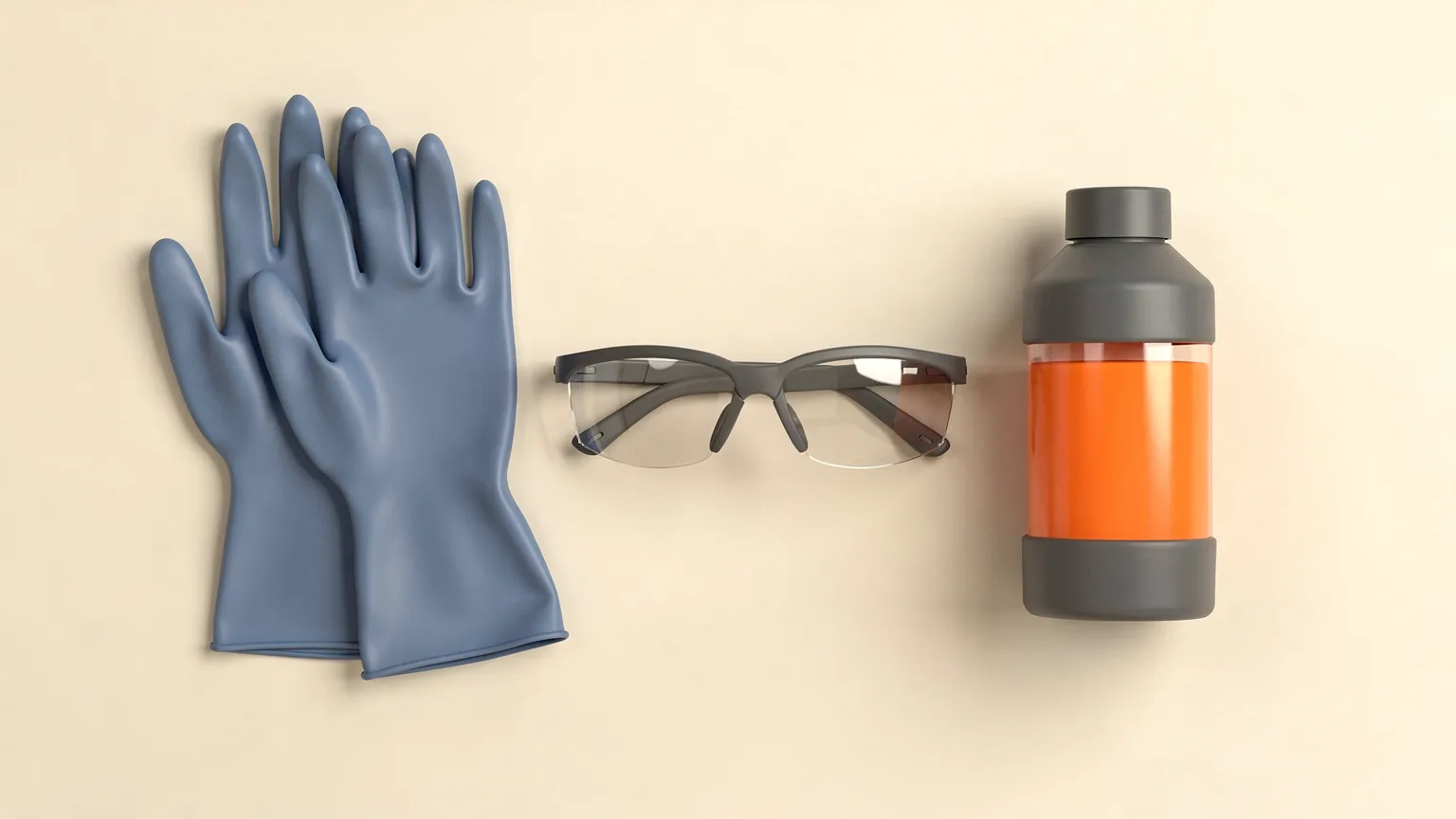
Read this first. This page relays general guidance from printer and resin makers. It is not medical, legal or professional safety advice. The Safety Data Sheet (SDS) and instructions that come with your own resin and printer are the documents to follow, and they override anything written here. If you feel unwell or have a reaction, follow the maker's instructions and contact a medical professional.
Liquid 3D printing resin is a chemical product. Makers' guidance for it is consistent: avoid skin contact, ventilate the room, keep resin away from light, handle the cleaning solvent with care and dispose of waste properly. This guide collects the basics from Prusa's knowledge base and explains where to look for the details specific to your resin. For what resin printing is, start with what is resin 3D printing.
Start with the Safety Data Sheet
Every resin maker publishes an SDS or a safety page for each product. It lists the hazards, protective equipment, first-aid steps and disposal rules for that exact resin. Different resins differ, so general advice is only a starting point. Before you open a bottle, find the SDS from the maker or seller, read it, and keep it where you can find it. If a resin has no SDS available, treat that as a reason to buy a different one.
What the manufacturer guidance says
Prusa's knowledge base page on resins lists these points under "important information about resins". They are the manufacturer's recommendations, shown here as written guidance to follow.
| Topic | Manufacturer guidance (Prusa) |
|---|---|
| Skin contact | Wear gloves to avoid direct contact of the resin with your skin. |
| If resin touches skin or eyes | Wash with water and soap; for itching or discomfort after skin contact, seek medical assistance. |
| Fumes | Resin produces fumes, so keep the room ventilated during printing. |
| Allergies | Some people may be allergic to resins. If you notice itching or a rash, stop using the machine and contact a doctor. |
| Light | Keep away from light and store in opaque bottles. |
| Temperature | Keep at room temperature (18 to 32 °C); lower temperatures change viscosity and can cause gelation. |
| Storage | Keep in original, properly sealed containers; never store resin in drink bottles. |
| Disposal | Do not throw resin bottles, empty or full, in regular waste. Treat liquid resin as a dangerous chemical and follow your country's rules. |
Gloves, eyes and clothing
The guidance above names gloves as the baseline. Check the SDS of your resin for the glove material and any eye or clothing protection it recommends, because the right protection depends on the product. Prusa's washing instructions also say to wear gloves when removing the printing platform and when removing a washed object from the tank. The SDS also covers hygiene and first-aid steps for your resin, so read those sections too.
Ventilation and fumes
Makers say to keep the room ventilated while printing. Some sell accessories for this. Elegoo lists a Mars Mate air purifier among its resin printing accessories, for example, but a purifier is an add-on and the SDS and manual say what the resin maker actually requires. Do not rely on marketing claims such as "odor-free" alone. Where you set the printer up matters, so choose a space with airflow and one that stays within the storage temperature range.
Cleaning solvents and fire
Many resins are washed in isopropyl alcohol (IPA). Prusa's washing guide calls it a volatile flammable liquid and warns not to leave the lid closed when the liquid container is in its wash machine. Keep IPA away from heat and ignition sources, and follow the container and SDS instructions. Water-washable resins avoid IPA, and Elegoo markets them as rinsing under water. They are still resins, so the same skin-contact and disposal guidance applies.
Light, spills and waste
Resin hardens in UV light, including sunlight, which is why makers say to store it in opaque bottles away from light. For spills, leftovers and used wipes, the SDS gives the cleanup and disposal instructions for that resin. Prusa says to treat liquid resin as a dangerous chemical and follow your country's rules for disposing of it, and your local waste authority can tell you where to take it.
A simple safety setup
- Read the SDS and the printer manual before the first print.
- Set up in a ventilated room that stays within the resin's storage temperature range, and check the SDS and manual for any placement advice.
- Put out gloves, paper towels, a tray under the printer and a labeled container for waste.
- Pour and clean in the same spot every time, and cover surfaces you can discard.
- Wash and cure parts as in our wash and cure guide.
- Store resin in its original bottle, sealed, away from light.
Compare with filament printing
Filament printers have their own hazards, covered in 3D printer safety basics. If handling chemicals is a concern, weigh that against your needs in FDM vs resin 3D printers before buying a resin machine.
If you only read one thing: the SDS for your resin is the authority. Gloves, ventilation, light-tight storage and proper disposal are the common thread in maker guidance, but follow the documents that came with your product.
Frequently asked questions
Is resin 3D printing safe?
Makers treat liquid resin as a chemical to handle with care. Their guidance includes wearing gloves, ventilating the room, avoiding skin contact and following the resin's Safety Data Sheet. This page relays that guidance and is not medical advice.
Do I need gloves for resin printing?
Prusa's guidance says to wear gloves to avoid direct skin contact with resin. Check your resin's Safety Data Sheet for the glove type and any other protection it names.
Where can I find a resin Safety Data Sheet?
Resin makers and sellers publish an SDS for each product, usually on the product page or by request. Read it before opening the bottle.
How should I dispose of uncured resin?
Prusa says not to put resin bottles, empty or full, in regular waste, and to treat liquid resin as a dangerous chemical and follow your country's rules. Your local waste authority can say where to take it.
Sources

Founder and editor
Software engineer since 2009 and Head of Engineering by day, a maker who has owned several 3D printers, writing practical guides to 3D printers, filament and running costs, with every article saying what was and was not tested.
Keep reading
Types of 3D Printer Resin: Standard, Tough, Water-Washable and More
Resin comes in a few families: standard, water-washable, ABS-like or tough, flexible and specialty. Here is what each is for, what it costs and what to check before buying.
10 October 2026 · 6 min read
What Is Resin 3D Printing? How It Works
Resin 3D printing hardens liquid photopolymer with UV light one layer at a time. Here is how SLA, DLP and MSLA differ, typical specs, and what a beginner needs.
10 October 2026 · 5 min read

Elegoo Saturn 4 Ultra: Specs, Price and Who It Suits
The Elegoo Saturn 4 Ultra is a 10-inch 12K mono LCD resin printer announced in April 2024. This page lists the maker's specs and price, what changed from the Saturn 3 Ultra, and who it may suit.
10 October 2026 · 5 min read