Types of 3D Printer Resin: Standard, Tough, Water-Washable and More
Resin comes in a few families: standard, water-washable, ABS-like or tough, flexible and specialty. Here is what each is for, what it costs and what to check before buying.
By Sepehr Sabbagh-pour · Published 10 October 2026 · 6 min read
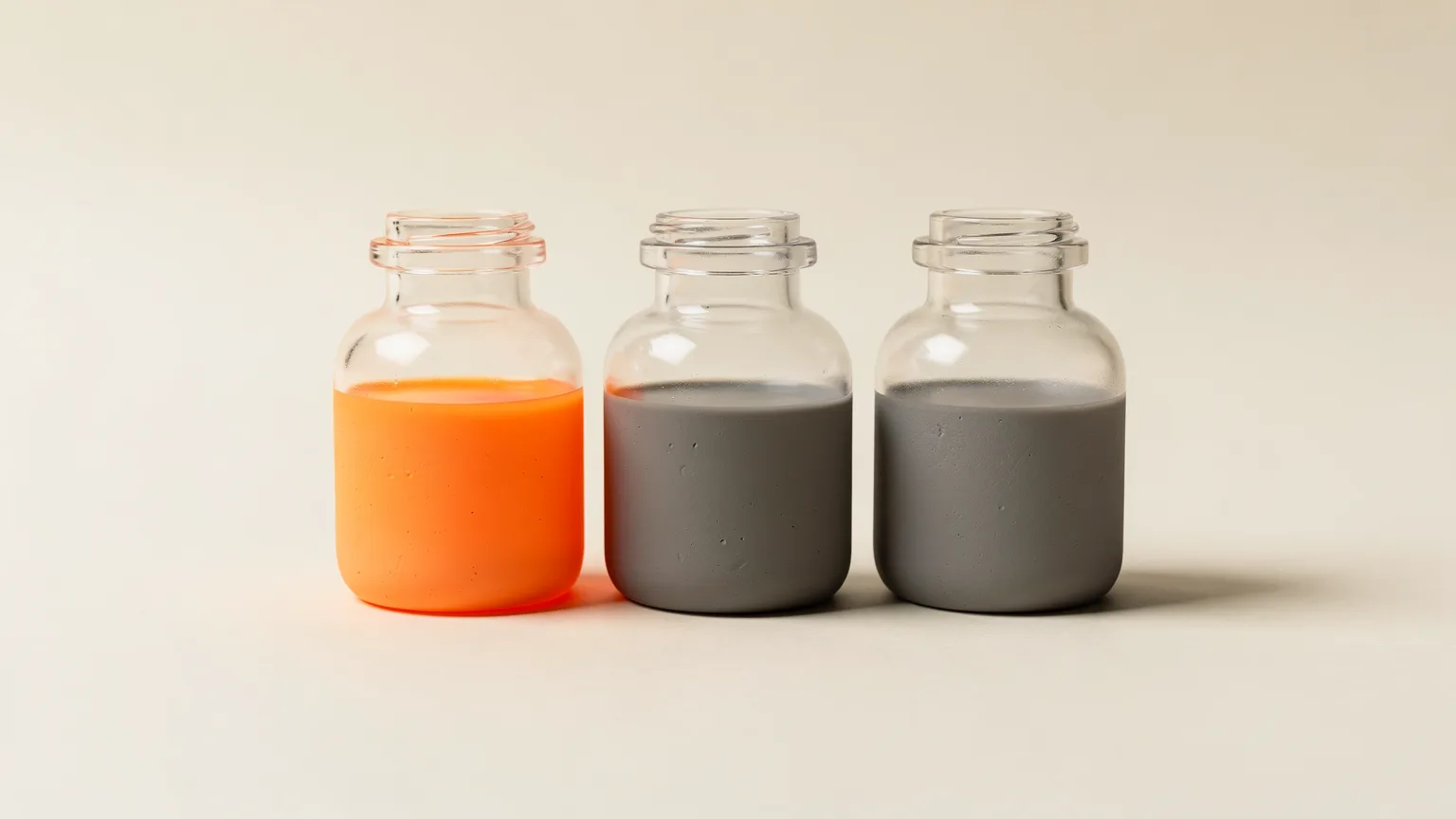
Resin 3D printers cure liquid photopolymer with light, one layer at a time. The bottle you pour in decides how the finished part looks, how it breaks and how you clean it. This explainer is built from maker documentation and product pages, so it describes what each resin family is marketed for. It has not been tested by us, and a brand name tells you less than the data sheet does.
If you only read one thing. Start with a standard or water-washable resin made for your printer, buy 1 kg, and read the Safety Data Sheet before you open it. Move to a tougher resin only when a part needs to survive handling.
The main resin types at a glance
| Type | Best for | Main trade-off |
|---|---|---|
| Standard | Miniatures, display models, prototypes that only need to look right | Tends to be brittle in thin sections |
| Water-washable | Beginners and people who want to avoid solvent washing | Still needs gloves, curing and careful waste handling |
| ABS-like / tough | Parts that are handled, clipped or flexed a little | Often costs more; real strength varies by brand |
| Plant-based | Users who prefer a lower-odor, bio-derived formulation | Still a photopolymer that needs the same precautions |
| Flexible / elastic | Gaskets, grips, soft inserts | Mostly an industrial-printer material |
| Specialty (castable, high-temp, clear, ceramic) | Jewelry casting, heat resistance, optical parts | Needs specific printers, post-processing and cost |
Standard resin
Standard resin is the general-purpose option. Formlabs describes its general purpose resins as high resolution with a smooth, matte surface finish. For hobby LCD printers, Elegoo lists its standard line from $18.99 per 1 kg bottle on its US store (checked 2026-10-10), in about ten colors including grey, black and translucent shades.
Standard resin suits figures, busts, scale models and fit-check prototypes. It is also the easiest material for calibration prints. The weakness is that thin cured features can snap, so it is a poor choice for clips, hinges or anything dropped often. Many makers also sell an 8K variant tuned for printers with very high-resolution screens; it is the same idea with a formulation aimed at fine detail.
Water-washable resin
Water-washable resin is formulated so that uncured resin rinses off with water rather than isopropyl alcohol. That removes one chemical from the workflow and makes cleanup less smelly. It does not make the resin safe. Retailer guidance for Elegoo resins states that all UV resin, including water-washable, needs nitrile gloves, ventilation, eye protection and skin-contact avoidance, and that water-washable means easier rinsing, not drain-safe disposal.
Price is a little higher. Elegoo lists its 8K Water-Washable Resin V2.0 at $25.99 per 1 kg on its US store (checked 2026-10-10). The wash water itself still contains resin; follow the Safety Data Sheet and local rules for disposal. Our guide to washing and curing resin prints covers the workflow.
ABS-like and tough resins
ABS-like resin is marketed as a less brittle alternative to standard resin. It is a marketing term, not a standard: the part does not behave like ABS filament. Elegoo sells several ABS-like versions (V2.0, V3.0, V3.0 Plus, V3.0 Pro and an Ultra), with 1 kg prices on its US store ranging from $17.99 to $19.99 for the core versions (checked 2026-10-10). Retailer guidance describes them as suited to brackets, housings, jigs and snap-fit tests.
True tough resins publish numbers. As a reference point, Formlabs lists Tough 2000 Resin V2 with 79% elongation at break, 40.4 MPa ultimate tensile strength, 1701 MPa flexural modulus and a heat deflection temperature of 70 °C. That is a professional-printer material starting at $149 on the Formlabs site, so it shows what a data sheet looks like rather than what a hobby ABS-like bottle delivers. Compare any resin you consider on the same published fields.
Plant-based resin
Plant-based resins are standard-style photopolymers with a bio-derived share of the formulation, often with less odor. They are cured and handled like any other resin. Check the data sheet for the actual composition claim, and do not treat the label as a reason to skip gloves or ventilation.
Flexible, castable and other specialty resins
Formlabs documents the wider range: clear resin that polishes to near optical transparency, clear cast resin for investment casting with clean burnout, high temperature resin, rigid resins that resist bending, and flexible or elastic resins that mimic rubber, TPU or silicone. Its Flexible 80A Resin V2 lists 230% elongation at break and 10 MPa ultimate tensile strength. These are usually made and validated for specific printers. Using them on a hobby printer is often possible only when the resin is sold for 405 nm LCD machines, so confirm compatibility first.
How to choose a resin
- Match the light source. Many hobby LCD printers expect 405 nm resin. Use the wavelength and exposure profile the maker lists.
- Decide how you will wash. Alcohol-wash setups work with any resin; water-washable simply changes the rinse step.
- Pick by the part. Display piece: standard. Handled part: ABS-like or tough. Soft part: flexible, on a printer that supports it.
- Buy 1 kg first. Resin ages and settings vary by bottle and color, so a small bottle limits waste while you find a working profile.
- Read the Safety Data Sheet. Follow the maker's handling, storage and disposal guidance. See resin 3D printing safety for the basics.
Common mistakes
- Choosing by the word "tough" or "ABS-like" with no data sheet to back it.
- Assuming water-washable resin can go down the drain.
- Mixing resins in one vat without cleaning it first.
- Using a profile from a different resin or a different printer without a test print.
Not sure whether resin is the right technology at all? Compare it with filament in FDM vs resin 3D printers, or see what resin 3D printing is.
Frequently asked questions
What are the main types of 3D printer resin?
The main families are standard, water-washable, ABS-like or tough, plant-based, flexible and specialty resins such as castable, clear and high-temperature. Hobby printers mostly use the first four.
Is water-washable resin safe?
It is easier to rinse, but it is not harmless. Manufacturers and retailers still advise gloves, ventilation and eye protection, and the wash water should not go down the drain. Follow the Safety Data Sheet.
Is ABS-like resin as strong as ABS plastic?
Not necessarily. ABS-like is a marketing label for a less brittle resin, not a standard. Compare published elongation, tensile and impact figures on the data sheet.
Can I use any resin in any resin printer?
No. Use a resin made for your printer's light source, which is commonly 405 nm on hobby LCD printers, and start from the exposure profile the resin maker or printer maker publishes.
Sources

Founder and editor
Software engineer since 2009 and Head of Engineering by day, a maker who has owned several 3D printers, writing practical guides to 3D printers, filament and running costs, with every article saying what was and was not tested.
Keep reading

What Is Resin 3D Printing? How It Works
Resin 3D printing hardens liquid photopolymer with UV light one layer at a time. Here is how SLA, DLP and MSLA differ, typical specs, and what a beginner needs.
10 October 2026 · 5 min read

Elegoo Saturn 4 Ultra: Specs, Price and Who It Suits
The Elegoo Saturn 4 Ultra is a 10-inch 12K mono LCD resin printer announced in April 2024. This page lists the maker's specs and price, what changed from the Saturn 3 Ultra, and who it may suit.
10 October 2026 · 5 min read
Free CAD Software for 3D Printing: Where to Start
Six free CAD options for designing your own 3D prints, with the platform, license terms and limits of each, and a simple way to pick where to start.
10 October 2026 · 8 min read