1.75 mm vs 2.85 mm Filament: Which Does Your Printer Use?
1.75mm vs 2.85mm filament: most printers use 1.75 mm filament. 2.85 mm, often sold as 3 mm, is for UltiMaker, BigRep and some professional machines. Here is how they differ and how to pick.
By Sepehr Sabbagh-pour · Published 10 October 2026 · 6 min read
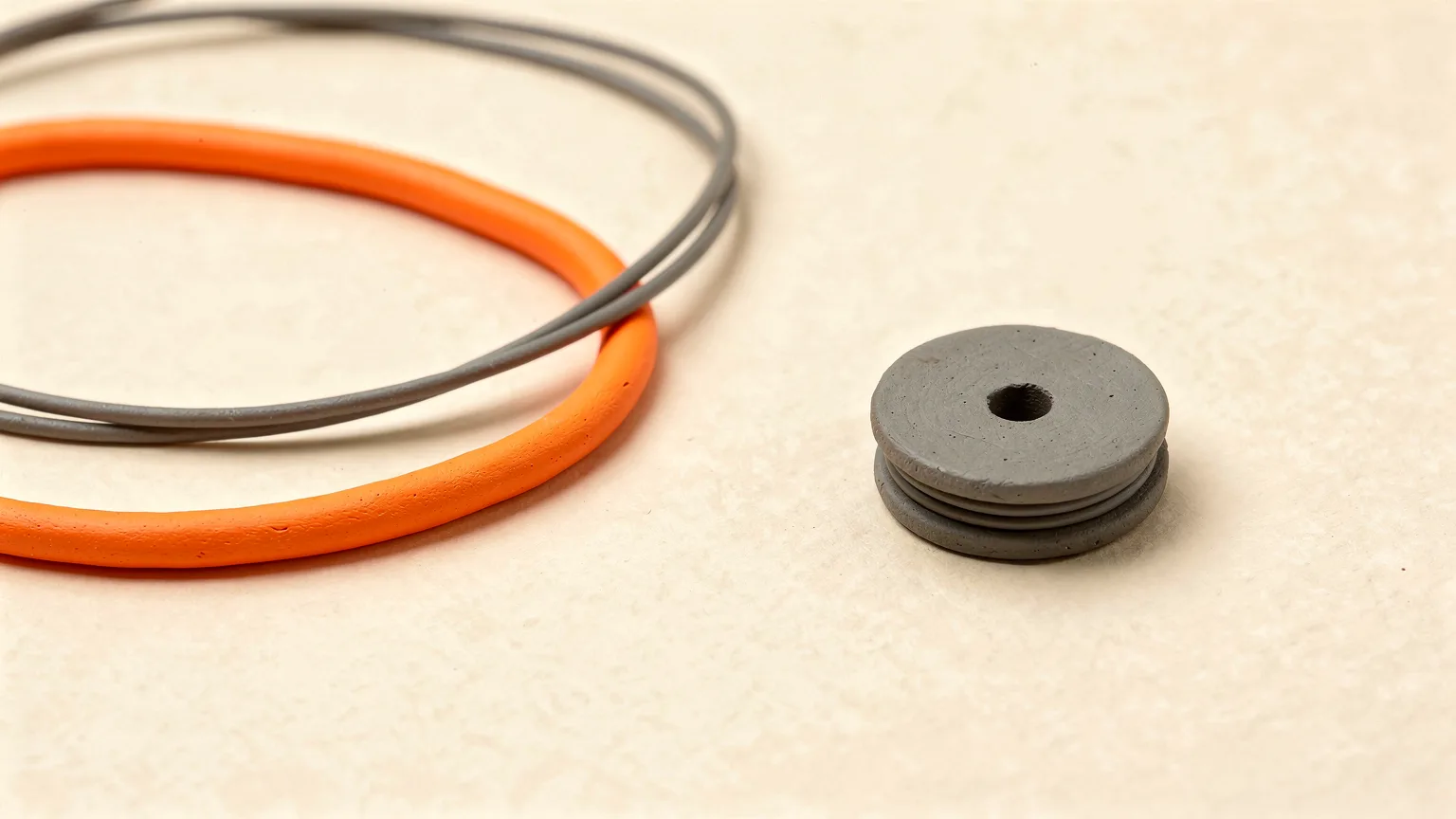
In the 1.75mm vs 2.85mm filament question, the hobby answer is almost always 1.75 mm. A smaller group of professional machines, notably UltiMaker's S-series, use 2.85 mm, and you will also see it sold as "3 mm". The two are not interchangeable, so the right answer is whichever diameter your printer was built for. This comparison is research only, drawn from maker and supplier pages. Nozzle Notes has not run both sizes side by side.
The short answer
- Buy 1.75 mm unless your printer's manual or maker says otherwise. It is the standard for most hobby machines, and the diameter listed in Bambu Lab's data sheets and on Elegoo's filament pages.
- Buy 2.85 mm only for a printer designed for it, such as UltiMaker 2, 3, S-line and Factor 4 machines, per supplier listings, or BigRep large-format printers.
- If you are not sure, look up the filament diameter in the printer's specification sheet before ordering. A spool of the wrong size cannot be fed through the extruder.
1.75 mm vs 2.85 mm side by side
| 1.75 mm | 2.85 mm (often sold as 3 mm) | |
|---|---|---|
| Who uses it | Most hobby and consumer printers | UltiMaker, BigRep, LulzBot, BCN3D and other professional or legacy machines (per Filamentive) |
| Cross-section area | Baseline (about 2.4 mm²) | About 2.65 times larger (about 6.4 mm²) |
| Stiffness of the strand | Flexible filaments can buckle in the path | Stiffer, which Filamentive says reduces buckling with TPU and TPE |
| Material and color range | Very wide | Narrow: one UK supplier lists PLA, PETG, carbon fiber PETG and ASA |
| Spool sizes | Typically 1 kg (Bambu, Elegoo) | UltiMaker spools are 750 g; large-format spools up to 8.5 kg exist (Filamentive) |
| Market direction | Industry standard for hobby use | A shrinking niche, according to industry comments quoted by Filamentive |
The area figures are simple arithmetic: area scales with the square of the diameter, so (2.85 / 1.75) squared is about 2.65. Filamentive describes the same relationship as "over 2.5 times".
Why two sizes exist
Filamentive's history of the format says early makers used ABS welding rod of around 3 mm because it was easy to get. As printer designs moved to Bowden extruders, filament had to feed through tight tubes. Common PTFE tubing had a 3 mm inner diameter, so true 3 mm filament often jammed. The slightly smaller 2.85 mm size became the standard for those machines. The supplier says 1.75 mm has since become the norm for hobby use, and a "3 mm" spool is usually 2.85 mm in practice.
If you are curious about the feed path, our guide to direct drive vs Bowden extruders explains how each design handles filament.
Advantages of each, as supplied by sellers
Filamentive, a supplier that stocks both, lists the benefits of 2.85 mm as a stiffer feedstock that buckles less, a larger cross-section that allows more material per turn of the extruder gear, less sensitivity to diameter tolerance deviations and suitability for long print runs on big spools. These are a seller's points, and 1.75 mm benefits from a vastly larger choice of materials, colors and brands, which is the practical reason most hobby users never consider anything else.
Both sizes are made to tight tolerances: Prusa guarantees a manufacturing tolerance of plus or minus 0.02 mm on Prusament, and Elegoo lists plus or minus 0.02 mm on its 1.75 mm spools.
Can you use the wrong size?
No. The extruder gear, the hotend throat and any PTFE tube are sized for one diameter. Filament that is too thick will not fit through, and filament that is too thin will not be gripped or sealed properly. The slicer also assumes a diameter when it calculates how much to push, so a profile for 1.75 mm would under-feed or over-feed a different size. Check that the filament diameter in your slicer matches the spool, which should already be the case in a maker's profile.
Check the printer maker's specification page before buying. UltiMaker's own Method series, for example, is described by one reseller as using a 1.75 mm filament collection, even though the S-line uses 2.85 mm, so diameter depends on the specific model and not just the brand.
How to find out which size your printer uses
- Read the specification page. The maker's spec sheet or manual states the filament diameter. This is the only reliable source.
- Check the spool you already have. Maker spools state the diameter on the label, as in Bambu Lab's data sheets, which list 1.75 mm.
- Check your slicer profile. A profile supplied by the printer maker has the right diameter set. If you create a custom profile, enter the diameter from the spool label.
- Do not swap by guesswork. Filamentive notes that institutions with fleets of UltiMaker printers stay on 2.85 mm because switching diameter can require hardware upgrades.
Which should you choose?
Rule of thumb. You do not choose the diameter, your printer does. If you are buying a new machine, 1.75 mm gives you the widest supply of filament and the best prices. A 2.85 mm printer makes sense only when you have a specific professional or large-format reason for it.
If you are still choosing a printer, see the first printer checklist and what a 3D printer costs. If you already own one, our guides to nozzle sizes and storing filament cover the next decisions. For the flexible materials where 2.85 mm is sometimes preferred, read what TPU is.
Prices differ by brand, region and spool weight, so compare cost per kilo rather than per spool, and check the current listing. Use the print cost calculator to turn a spool price into a cost per part.
Frequently asked questions
What is the difference between 1.75 mm and 2.85 mm filament?
It is the diameter of the strand. A 2.85 mm strand has about 2.65 times the cross-section area of 1.75 mm. 1.75 mm is standard on hobby printers, while 2.85 mm is used on UltiMaker and some professional or large-format machines.
Is 2.85 mm the same as 3 mm filament?
In practice, usually yes. Filamentive says early 3 mm filament jammed in Bowden tubes with a 3 mm inner diameter, which led to the slightly smaller 2.85 mm standard. Spools sold as 3 mm are generally 2.85 mm.
Can I use 2.85 mm filament in a 1.75 mm printer?
No. The extruder, hotend and any PTFE tube are sized for one diameter, so the wrong size will not feed correctly. Check your printer maker specification before buying filament.
Which filament diameter is more common?
1.75 mm is the standard for hobby printing. Industry comments quoted by Filamentive describe 2.85 mm as a shrinking niche used mainly in professional, legacy and large-format machines.
Why would anyone use 2.85 mm filament?
Filamentive lists a stiffer strand that buckles less with flexible materials, more material per extruder turn, less sensitivity to diameter tolerance and suitability for large spools. For most users the range of materials makes 1.75 mm the practical choice.
Sources

Founder and editor
Software engineer since 2009 and Head of Engineering by day, a maker who has owned several 3D printers, writing practical guides to 3D printers, filament and running costs, with every article saying what was and was not tested.
Keep reading
PLA vs PETG vs ABS vs TPU: Which Filament Should You Use?
Four materials cover most home printing. Here is what each is good at, what it demands from your printer, and how to choose without overthinking it.
10 October 2026 · 2 min read
0.2, 0.4 or 0.6 mm? What Nozzle Size Actually Changes
The standard 0.4 mm nozzle is a good all-rounder, but swapping size trades detail for speed and strength. Here is what changes and what to watch for.
10 October 2026 · 2 min read
ABS vs PETG: Which Should You Print With?
ABS and PETG are both tougher than PLA. PETG prints easily on open printers; ABS needs an enclosure but can be smoothed with acetone. Here is how to choose.
10 October 2026 · 7 min read