Direct Drive vs Bowden Extruders
A direct drive extruder sits on the toolhead; a Bowden extruder sits on the frame and pushes filament through a tube. Here is how that changes printing.
By Sepehr Sabbagh-pour · Published 10 October 2026 · 7 min read
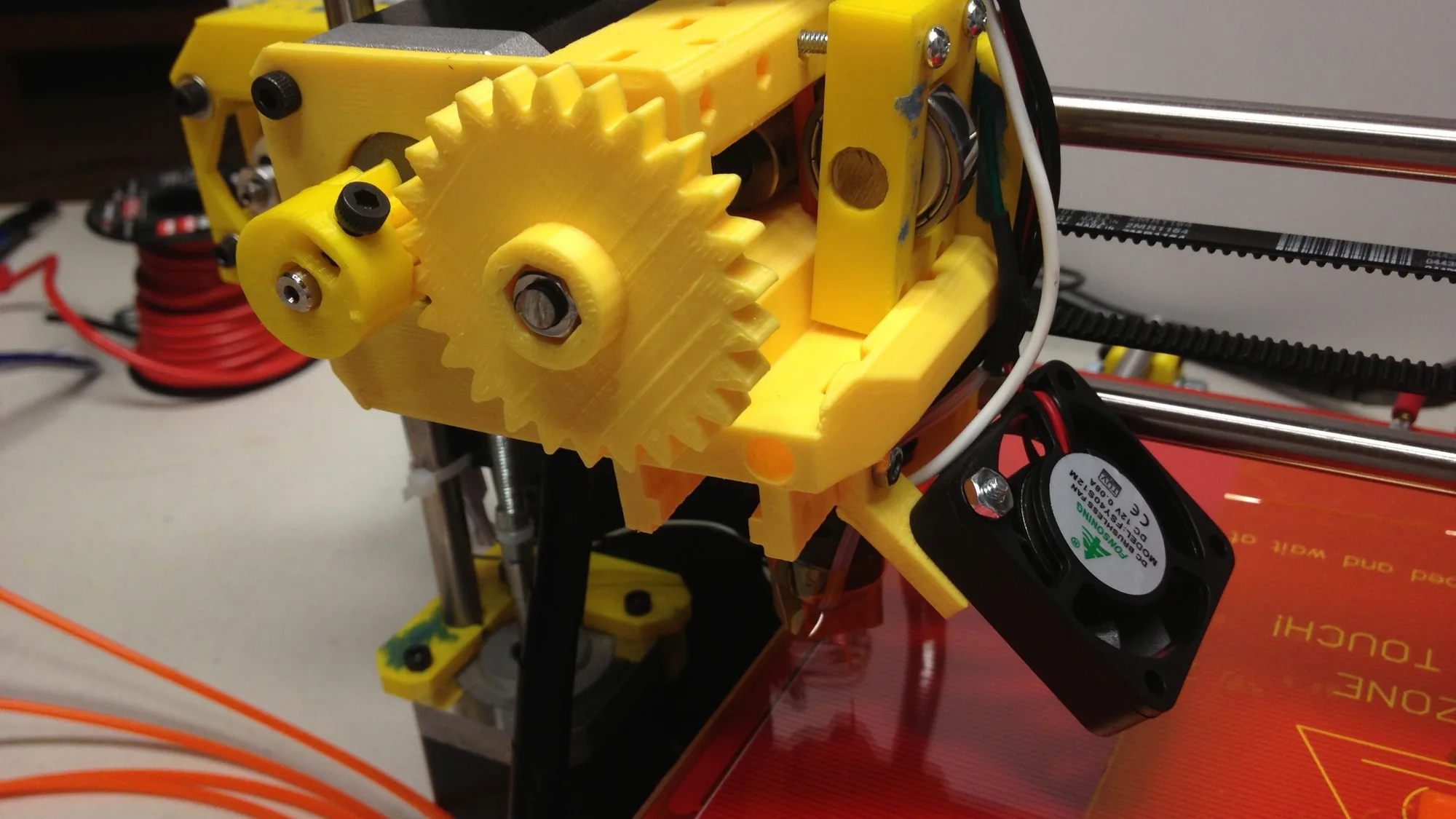
Every FDM printer has an extruder that grips filament and pushes it into the hotend. Where that extruder sits splits printers into two camps: direct drive and Bowden. This is a research-based comparison from published guides. It has not been tested by us, and the retraction ranges quoted are typical starting points, not measurements of a specific printer.
The short answer
- Direct drive suits most people: easier retraction, better with flexible filament, and fewer tuning headaches.
- Bowden suits lightweight, fast or budget machines that print mostly PLA and PETG.
- If you plan to print TPU, nylon or abrasive composites, prefer direct drive.
How each setup works
In a direct drive extruder, the motor and feed gears are mounted on the toolhead, right above the hotend. Obico describes this as a short, direct path for the filament. The retailer OzFDM puts the distance between the extruder gears and the nozzle tip at roughly 20 to 40 mm.
In a Bowden extruder, the motor is fixed to the printer frame and filament travels to the hotend through a PTFE tube, the Bowden tube. OzFDM notes that on an Ender 3 that tube might be 400 to 500 mm long. The tube lets the toolhead stay light, but the filament has a much longer path.
Direct drive vs Bowden side by side
| Direct drive | Bowden | |
|---|---|---|
| Extruder location | On the toolhead | On the frame |
| Filament path | Short | Long, through a PTFE tube |
| Toolhead weight | Heavier | Lighter |
| Retraction | Quick and responsive; OzFDM cites 0.5 to 2 mm | Slower response; OzFDM cites 4 to 8 mm |
| Flexible filament (TPU) | Manageable | Harder; the filament can buckle in the tube |
| Motor | Smaller motor can do the job | Needs more torque to push through the tube, per Obico |
| Access for maintenance | Parts packed into the toolhead; can be fiddly | Extruder sits on the frame, usually easier to reach |
Retraction and stringing
Retraction pulls filament back slightly during travel moves so the nozzle does not ooze. With a short path, the pull acts on the filament almost at once. With a long tube, Obico says the response lags and OzFDM says the tube compresses and stretches, absorbing some of the movement. The result is that Bowden setups usually need larger retraction distances and more careful tuning to avoid strings.
If you are chasing strings on either type, start with the stringing fix guide and then read about retraction settings. PETG is the filament most associated with stringing, so see also fixing PETG stringing. Wet filament makes things worse on any extruder, so check how to dry filament too.
Flexible and abrasive filament
This is the clearest dividing line. Obico says direct drive extruders handle a variety of filaments, from flexible to tough and abrasive types, and that a Bowden setup copes with standard filaments but can struggle with softer, more flexible ones. OzFDM says an elastic filament being pulled back through a long flexible tube tends to buckle and jam. If TPU is on your list, read what TPU is, and treat a direct drive extruder as the safer starting point.
Speed and toolhead weight
The Bowden advantage is a lighter toolhead. Obico says reduced weight allows more agile movement and can mean cleaner prints at high speed. OzFDM adds that a direct drive motor adds about 200 to 400 grams of moving mass, and that on a Cartesian bed slinger this reduces practical top speed compared with a Bowden machine.
The same source says this penalty is more manageable on a CoreXY machine paired with input shaping, which is why it notes that many high-performance printers use direct drive. The motion system matters here, so read CoreXY vs bed slinger alongside this page.
Maintenance
Obico points out that direct drive puts everything in the printhead, which can make some parts harder to reach. A Bowden tube is itself a wear item: kinks, wear at the ends or a loose fitting can cause feeding problems. Whichever you own, follow the maker's maintenance guide for tube and fitting replacement intervals.
Examples and how to check your own printer
Obico gives the Prusa i3 MK4 and the Creality Ender 3 S1 Pro as examples of printers that use direct drive, and OzFDM uses an Ender 3 as its example of a Bowden setup with a tube of roughly 400 to 500 mm. Models change between revisions, so do not rely on a name alone. The quickest check is physical: if the motor sits on the moving toolhead with a short filament path, it is direct drive. If a PTFE tube runs from a motor on the frame to the hotend, it is Bowden. The maker's spec page or manual will also say.
It is worth knowing which you have before you adjust settings. Retraction values copied from a forum post written for the other type will give poor results. Start from the slicer profile made for your exact printer, and change one value at a time. Those profiles already assume the right extruder type.
Which should you choose?
A simple rule. If you want one printer that handles the widest range of filaments with the least tuning, choose direct drive. If you want a lighter toolhead, mainly print PLA or PETG, and the price is right, a Bowden machine will do the job. Check the maker's spec page or manual for the extruder type before you buy.
Extruder type is one factor in a bigger decision. Our first printer checklist covers the others, and nozzle sizes explained covers the part at the other end of the filament path.
Frequently asked questions
Is direct drive better than Bowden?
For most users, yes: the short filament path gives quicker retraction and better handling of flexible filament. Bowden's advantage is a lighter toolhead, which helps speed on some machines. The right choice depends on the filaments and printer you use.
Can a Bowden extruder print TPU?
It can be difficult. Guides from Obico and OzFDM say flexible filament tends to buckle or jam in a long tube. Some people manage with careful settings, but direct drive is the more reliable choice for TPU.
What retraction distance should I use for Bowden or direct drive?
OzFDM cites typical ranges of 4 to 8 mm for Bowden and 0.5 to 2 mm for direct drive. These are general starting ranges. Use your slicer's profile for your printer and filament first, then adjust in small steps.
Does direct drive make a printer slower?
The extra toolhead weight can limit top speed on some bed slinger designs, according to OzFDM. On machines with strong motion systems and input shaping, the penalty is described as manageable. Check the specs of the printer you are considering.
Sources

Founder and editor
Software engineer since 2009 and Head of Engineering by day, a maker who has owned several 3D printers, writing practical guides to 3D printers, filament and running costs, with every article saying what was and was not tested.
Keep reading
Anycubic Kobra S1: Specs, Price and Who It Suits
Anycubic Kobra S1 Combo specs, launch price and who it suits, from Anycubic's own pages. Not tested by us.
10 October 2026 · 5 min read
Bambu Lab A1: Specs, Price and Who It Suits
The Bambu Lab A1 is an open-frame 256 mm bed slinger sold from £209 in the UK store. Here are the maker's specs, prices and who it suits. Not tested by Nozzle Notes.
10 October 2026 · 5 min read
Bambu Lab A1 mini: Specs, Price and Who It Suits
The Bambu Lab A1 mini is the smallest and cheapest current Bambu Lab printer here at £149 in the UK store. Maker specs, prices and who it suits. Not tested by Nozzle Notes.
10 October 2026 · 5 min read