PETG vs PLA: Which Filament Should You Use?
PLA is the easy default, PETG is the tougher all-rounder. Here is how they differ on temperature, strength, heat, warping and stringing, and how to pick.
By Sepehr Sabbagh-pour · Published 10 October 2026 · 5 min read
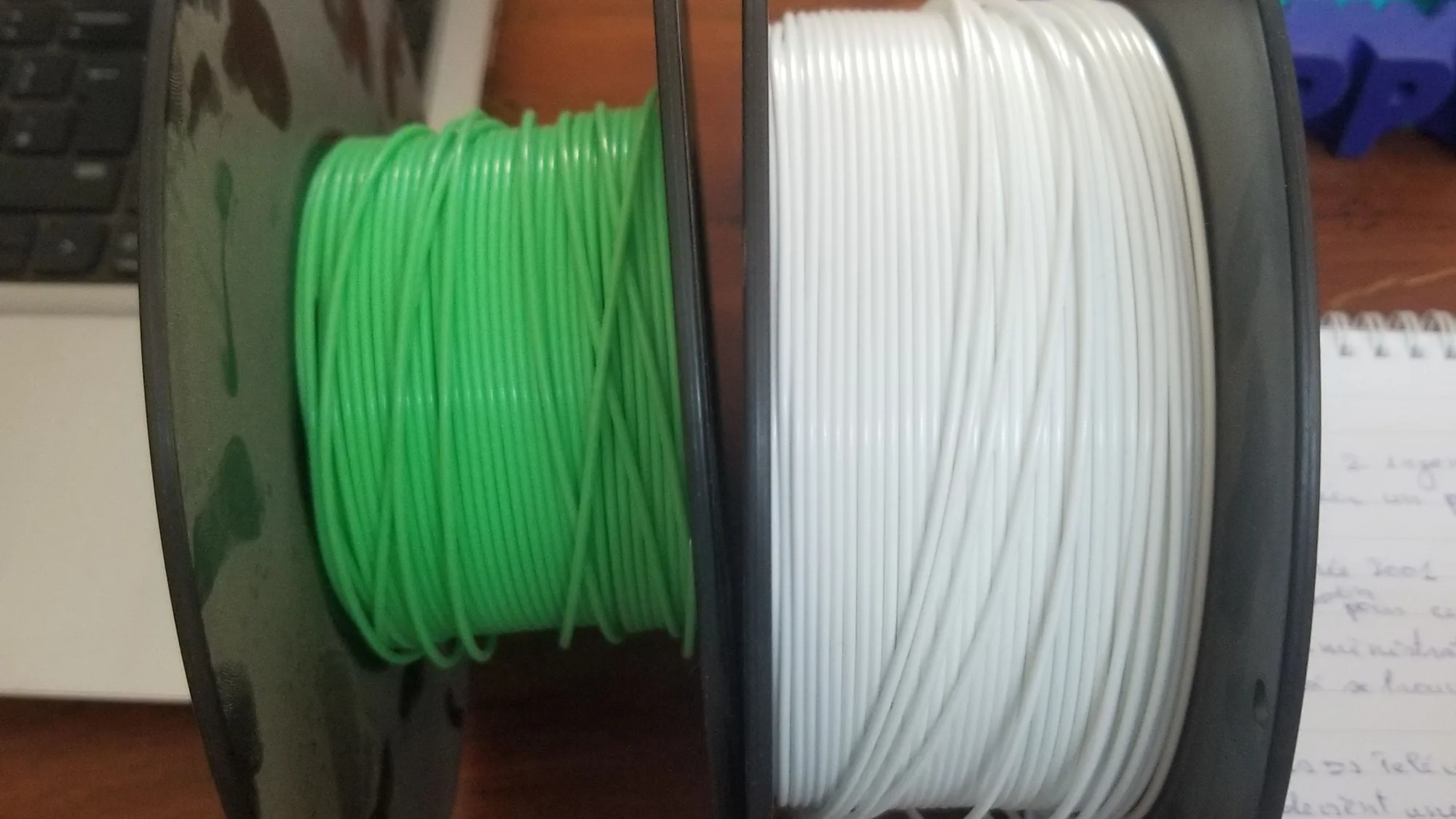
PLA and PETG are the two filaments most people use. PLA is the easy default. PETG costs a little more effort and gives you tougher, more heat-tolerant parts. This guide compares them on the things that decide which to buy, using manufacturer documentation, and ends with a simple rule for choosing.
The short answer
- Use PLA for display models, figures, prototypes, toys and anything that stays indoors and cool. It is the easiest material to print well.
- Use PETG for functional parts: brackets, enclosures, garden or workshop items, and anything that may get warm or knocked about.
- If you are new, start with PLA, get reliable first layers, then add PETG when a project needs it.
PETG vs PLA side by side
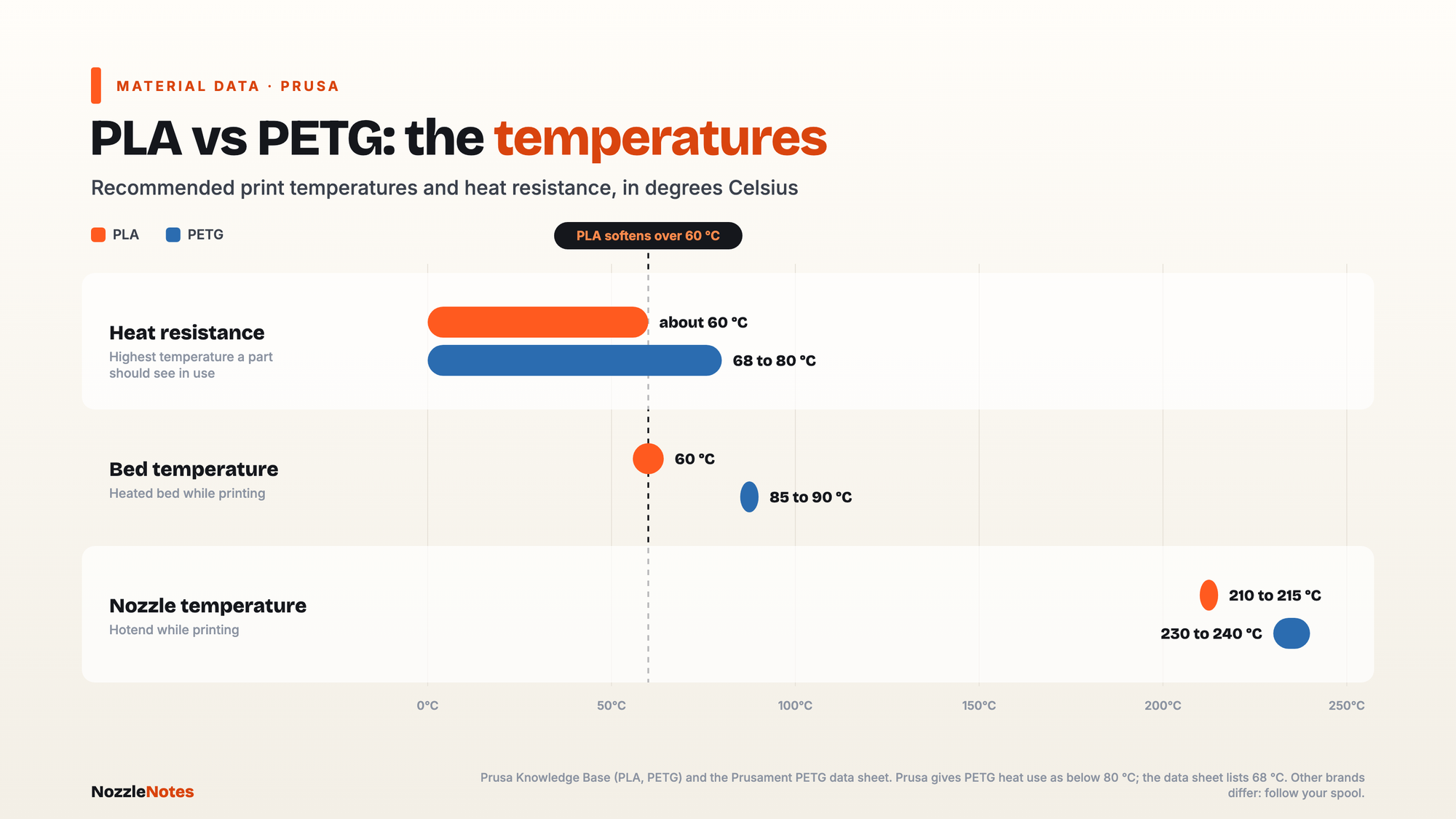
The figures below come from Prusa's knowledge base guides for each material and its Prusament PETG data sheet. Other brands list different ranges, and the temperature printed on your own spool always comes first.
| PLA | PETG | |
|---|---|---|
| Nozzle temperature | 210 to 215 °C | 230 to 240 °C |
| Bed temperature | 60 °C | 85 to 90 °C |
| Heat resistance | Softens and deforms over about 60 °C | Suitable for use below about 80 °C; the Prusament PETG data sheet lists 68 °C |
| Strength | Brittle and inflexible; breaks along layers or into shards on impact | Tougher and more ductile; Prusament PETG is rated high for toughness |
| Warping | Not prone to significant warping | Does not shrink or warp much, so it suits large models |
| Stringing | Sometimes prone to stringing and oozing | More prone to stringing |
| Bridges and overhangs | Not flagged as a weakness in Prusa's guide | Poor bridging and overhangs; supports can be hard to remove |
| UV and weather | Low UV and temperature resistance | Water and humidity resistant; suitable for most outdoor use |
Strength and toughness
PLA is stiff but brittle. Prusa describes it as inflexible, with parts that break along the layers or into shards when hit. PETG is the opposite: it gives a little before it breaks, which is why it is the usual upgrade for parts that get handled, clipped or dropped.
Heat resistance
This is the deciding factor for many projects. Prusa says PLA gets soft and deforms above 60 °C. A car parked in the sun is the classic example. PETG tolerates more: Prusa's guide says parts work for most uses below 80 °C, though the Prusament PETG data sheet gives 68 °C, so leave a margin and do not run either material near its limit.
Ease of printing
PLA is more forgiving. It prints at a lower temperature and is not prone to significant warping, and Prusa recommends it for detailed models, figures and quick prototypes. PETG needs more care in three places:
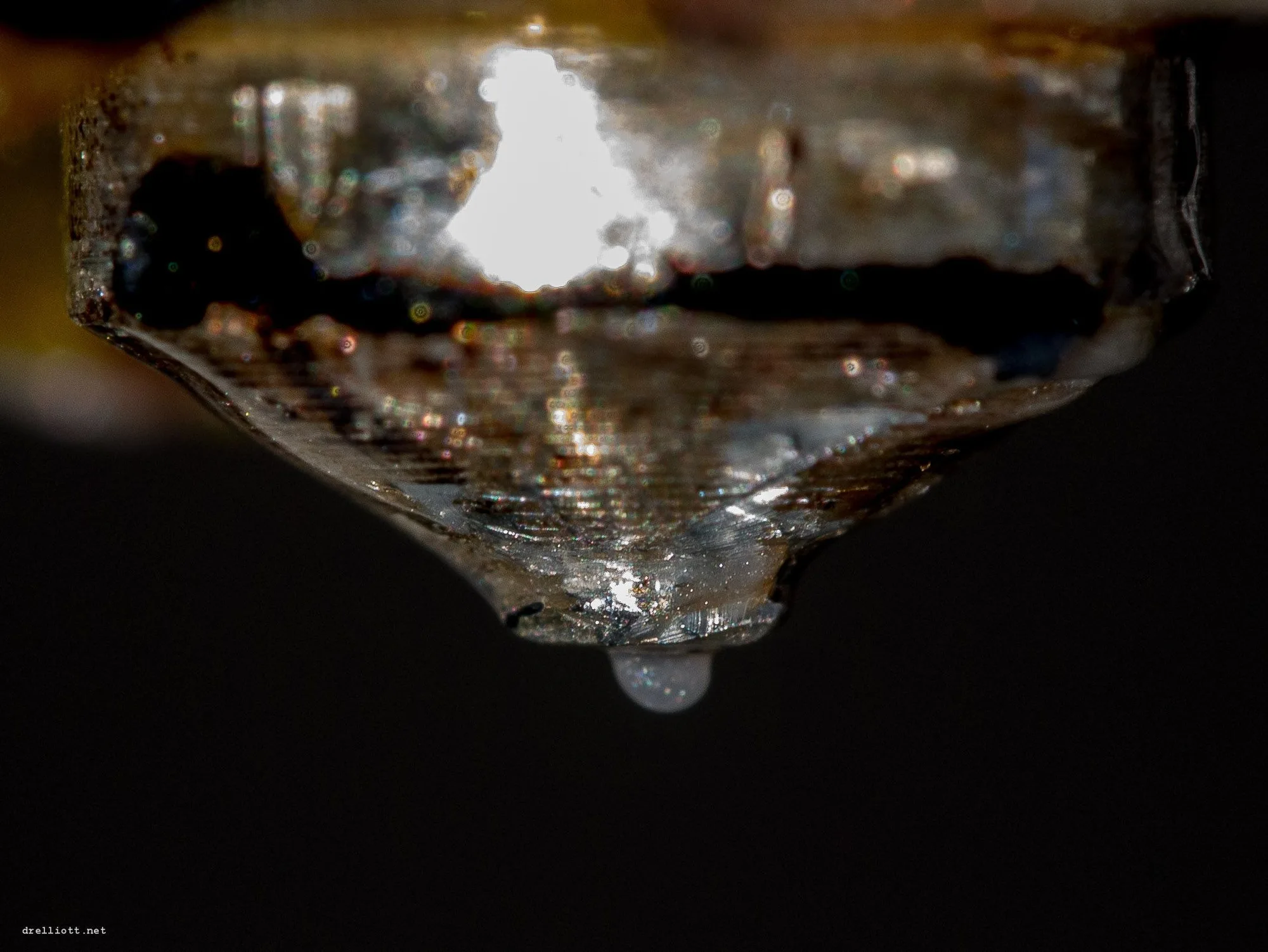
- Stringing. Fine strands between parts are common. Prusa suggests more retraction and a lower nozzle temperature, and active cooling helps. Our guide to fixing stringing covers the order to try things in.
- Bed adhesion. Prusa warns against printing PETG on a smooth PEI sheet because it can stick too strongly. Use a textured or powder-coated sheet, or a thin layer of glue stick as a release agent.
- Overhangs and bridges. PETG is weaker here, so orient parts to avoid long unsupported spans, and expect supports to be harder to remove.
.jpg)
Moisture
Both materials absorb moisture from the air, and wet filament causes stringing, rough surfaces and weak prints. Bambu Lab's wiki publishes separate drying recommendations for PLA and PETG, and a sealed box with desiccant stops the problem before it starts. See how to dry filament.
Food contact
Prusa describes PETG as a food-safe material but still advises against 3D-printed dishes, because bacteria can grow in the grooves between layers unless the surface is sealed with a food-safe coating. If any printed part will touch food, follow the filament maker's guidance for that specific product.
Which should you pick?
A simple rule. If the part will stay cool, indoors and unstressed, print PLA. If it needs to be tough, weatherproof or warm, print PETG. If you cannot decide, print the first copy in PLA to check the fit, then reprint in PETG for the final part.
For a wider comparison that also covers ABS, ASA and TPU, read PLA vs PETG vs ABS vs TPU. If you are choosing a printer as well as a material, the first printer checklist is the place to start.
This guide is built from manufacturer documentation. We have not run side-by-side print tests, and the figures above are the makers' recommendations, not our measurements.
Frequently asked questions
Is PETG better than PLA?
It is tougher and handles heat and weather better, but it is harder to print cleanly and strings more. PLA is easier and gives crisp results for models. Neither is better overall; choose by what the part must survive.
Is PETG stronger than PLA?
PETG is tougher, meaning it absorbs impact and bends before breaking, while PLA is stiff and brittle. For parts that get handled or dropped, PETG usually lasts longer. For a rigid part that never takes a knock, PLA is fine.
Can I print PETG on the same settings as PLA?
No. PETG needs a hotter nozzle (Prusa suggests 230 to 240 °C against 210 to 215 °C for PLA) and a hotter bed (85 to 90 °C against 60 °C). Start from a profile made for your printer and material, then adjust.
Which is better outdoors, PETG or PLA?
PETG. Prusa notes that PLA has low UV and temperature resistance, while PETG is water and humidity resistant and works for most outdoor use. For long-term sun exposure, check the filament maker's guidance, since UV-stable materials such as ASA are made for that job.
Sources

Founder and editor
Software engineer since 2009 and Head of Engineering by day, a maker who has owned several 3D printers, writing practical guides to 3D printers, filament and running costs, with every article saying what was and was not tested.
Keep reading
PLA vs PETG vs ABS vs TPU: Which Filament Should You Use?
Four materials cover most home printing. Here is what each is good at, what it demands from your printer, and how to choose without overthinking it.
10 October 2026 · 2 min read
0.2, 0.4 or 0.6 mm? What Nozzle Size Actually Changes
The standard 0.4 mm nozzle is a good all-rounder, but swapping size trades detail for speed and strength. Here is what changes and what to watch for.
10 October 2026 · 2 min read
ABS vs PETG: Which Should You Print With?
ABS and PETG are both tougher than PLA. PETG prints easily on open printers; ABS needs an enclosure but can be smoothed with acetone. Here is how to choose.
10 October 2026 · 7 min read