PLA+ vs PLA: Is It Worth Paying More?
PLA+ (also written PLA plus) is a marketing label for modified PLA, usually tougher and a little easier to print. Here is what the data shows, what the price gap is today and who should pay it.
By Sepehr Sabbagh-pour · Published 10 October 2026 · 6 min read
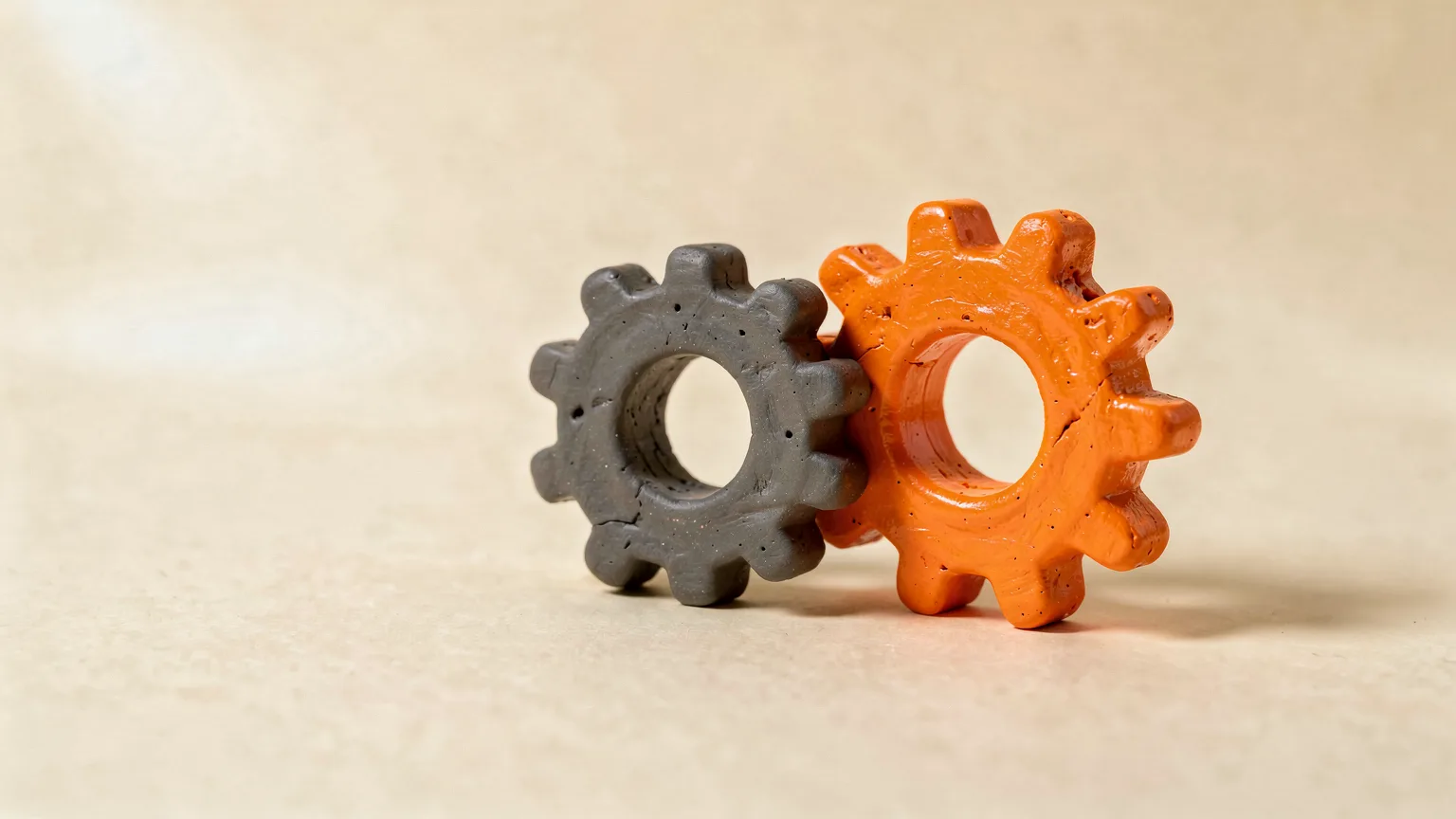
PLA+ is regular PLA that a manufacturer has modified, usually to make it tougher and a bit easier to print, for a small extra cost. The catch is that "PLA+" is a marketing label, not a defined material. This comparison is research only: it uses maker pages and a published third-party test, and Nozzle Notes has not printed either filament side by side.
The short answer
- Pay for PLA+ if your parts get dropped, snapped or clipped, or if big flat parts warp on plain PLA. The extra cost is small.
- Stay with standard PLA for display models, figures, prototypes and anything where stiffness and a glossy finish matter more than impact resistance.
- Neither is a heat-resistant material. If a part will get warm or sit outdoors, look at PETG or ASA instead.
What PLA+ actually is
There is no standard recipe. In a published comparison, the maker of the CNC Kitchen channel notes that every manufacturer adds its own mix of additives and modifiers, and that the results will not match any other brand exactly. The Safety Data Sheet for the modified Polymaker PolyMax PLA he tested listed a significant amount of acrylic polymers, while standard PolyLite PLA was mostly PLA with minor additives. That test used PolyMax as a stand-in for a typical PLA+, so treat it as one example, not a rule.
Maker marketing usually points the same way. Elegoo describes its PLA Plus as having enhanced toughness, better tensile strength, higher impact strength and less brittleness than usual PLA. These are the maker's claims, not independent results.
PLA vs PLA+ side by side
Prusa describes standard PLA as brittle and inflexible, breaking along layers or into shards on impact, and softening above 60 °C. The right-hand column comes from the 2020 CNC Kitchen test of one brand pair (Polymaker PolyLite PLA against PolyMax PLA), and individual PLA+ products will differ.
| Standard PLA (PolyLite) | Modified PLA (PolyMax) in the same test | |
|---|---|---|
| Print quality | Slightly more stringing, glossier finish | Less warping, better bed stick, more matte finish |
| Static tensile strength | 57 MPa | 43 MPa |
| Bending modulus (stiffness) | 3000 MPa | 2200 MPa |
| Impact absorbed | About 5 kJ/m², snapped through | Around four times tougher, mostly stayed in one piece |
| Heat | Failed at 65 °C | Failed at the same time, 65 °C |
| Price at the time | About 30 USD per kilo | About 45 USD for 750 g |
The pattern is the useful part. The tougher material was weaker under slow loading and less stiff, but it bent and absorbed energy before failing, where the standard PLA snapped without warning. Neither handled heat better.
Print settings
Makers publish different ranges. Prusa's PLA guide suggests 210 to 215 °C at the nozzle and a 60 °C bed. Elegoo lists 190 to 230 °C for its standard PLA, and its PLA Plus page does not give a temperature range in the text, so use the range printed on the spool or the maker's profile. In the CNC Kitchen test both materials ran at 215 °C, with a note that some other tough PLAs may need a little more heat. A slightly hotter nozzle is a common starting adjustment, but follow the label first. See our PLA print temperature guide.
Price gap today
The gap between the two has narrowed. On Elegoo's US store on 2026-10-10, standard PLA was listed at 13.99 USD for a 1 kg spool and PLA Plus at 14.99 USD, a difference of 1 USD per kilo. Other brands charge more for the modified version, and the CNC Kitchen test measured markups of 5 to 40% across brands in 2020. Check the current listing for the brands you actually buy, and use the print cost calculator to see what the difference means for a single part.
How to judge a PLA+ spool before buying
Because the label means little, look for evidence from the maker instead of the word "plus".
- Find a data sheet. Bambu Lab, for example, publishes typical values for tensile strength, breaking elongation, impact strength and heat deflection for each product. A product with no data sheet gives you nothing to compare.
- Look at elongation and impact, not just tensile strength. A tougher PLA shows up as higher breaking elongation and impact figures. Bambu's PLA Basic sheet lists 12.2% breaking elongation along the layers, which is a useful yardstick when you compare other sheets that use the same ISO test methods.
- Check the heat figure. If a product is sold as "Eco ABS" or similar, look for a heat deflection number. The CNC Kitchen test found no heat advantage for the modified material it tried.
- Read the temperature range. If the range sits well above standard PLA, plan to raise the nozzle temperature and recheck stringing.
Is PETG a better answer?
If you want toughness and some extra heat tolerance, the same CNC Kitchen test asks whether PETG might be a cheaper substitute for PLA+, since it has higher impact resistance and takes more heat. Prusa rates PETG for most uses below 80 °C. PETG needs a hotter nozzle and strings more, so read PETG vs PLA and what PETG is before switching.
How to choose
Rule of thumb. Buy PLA+ when the price gap is a dollar or two and the part may take knocks. Buy standard PLA when you want stiffness, fine detail or the lowest cost. Whichever you pick, store it dry: see how to dry filament.
Brand differences matter more than the label, so a cheap PLA+ from one maker can behave very differently from a premium one. Check the temperature range on the spool rather than assuming the label tells you. New to printing? Start with the beginner guide.
Frequently asked questions
What is the difference between PLA and PLA+?
PLA+ is PLA modified with additives, usually to improve toughness and printability. There is no standard recipe, so the difference depends on the brand. Makers such as Elegoo describe PLA Plus as tougher with less brittleness than usual PLA.
Is PLA+ stronger than PLA?
It is usually tougher, meaning it absorbs impact and bends before breaking, but not always stronger under slow loading. In one published test of a single brand pair, the standard PLA reached 57 MPa tensile strength against 43 MPa for the modified PLA, while the modified PLA absorbed about four times more impact energy.
Is PLA+ more heat resistant than PLA?
Not necessarily. In the same test both materials failed at 65 °C at the same time. Prusa says standard PLA gets soft and deforms above 60 °C. For heat tolerance, consider PETG or a material made for it.
Is PLA+ harder to print than PLA?
Generally no. The test found print quality basically the same, with the modified PLA warping less and sticking better but looking more matte. Some PLA+ products need a slightly hotter nozzle, so check the range on the spool.
Is PLA+ worth the extra money?
It can be when the price gap is small and parts may be dropped or flexed. On Elegoo US the gap was 1 USD per kilo on 2026-10-10, though other brands charge more. For display models, standard PLA is usually enough.
Sources

Founder and editor
Software engineer since 2009 and Head of Engineering by day, a maker who has owned several 3D printers, writing practical guides to 3D printers, filament and running costs, with every article saying what was and was not tested.
Keep reading
PLA vs PETG vs ABS vs TPU: Which Filament Should You Use?
Four materials cover most home printing. Here is what each is good at, what it demands from your printer, and how to choose without overthinking it.
10 October 2026 · 2 min read
0.2, 0.4 or 0.6 mm? What Nozzle Size Actually Changes
The standard 0.4 mm nozzle is a good all-rounder, but swapping size trades detail for speed and strength. Here is what changes and what to watch for.
10 October 2026 · 2 min read
ABS vs PETG: Which Should You Print With?
ABS and PETG are both tougher than PLA. PETG prints easily on open printers; ABS needs an enclosure but can be smoothed with acetone. Here is how to choose.
10 October 2026 · 7 min read