Where to Put a 3D Printer: Space, Noise and Ventilation
Where you put a 3D printer affects print quality, noise and air quality. A practical guide to space, surfaces, ventilation and the best rooms, using maker documentation.
By Sepehr Sabbagh-pour · Published 11 October 2026 · 7 min read
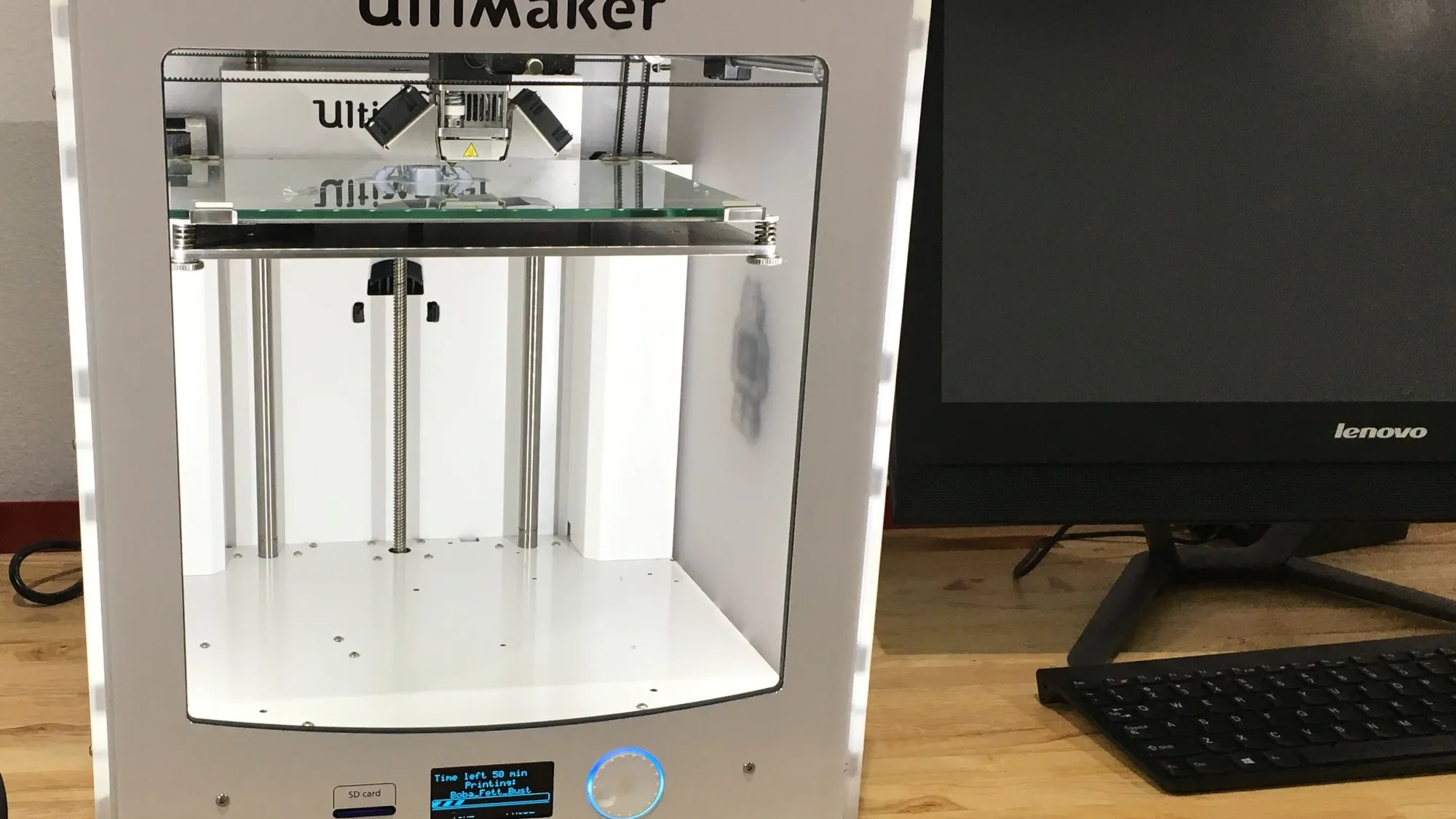
The best place for a 3D printer is a sturdy, level surface in a well-ventilated room with enough space around it, away from drafts and not in your bedroom. The right spot depends on the printer size, the filament you print and who shares the space.
This is a research guide based on maker specifications and documentation, checked on 2026-10-10. It is not a test of any printer in a particular room, and it is not safety or medical advice. For fumes and fire, follow the manufacturer's manual and the filament's Safety Data Sheet.
Step 1: measure the printer and the space
Start with the machine's physical dimensions. These are the makers' listed sizes, and they do not include the spool, cables or room to open doors and reach in.
| Printer | Listed dimensions (W x D x H) | Listed weight |
|---|---|---|
| Bambu Lab A1 mini | 347 x 315 x 365 mm | 5.5 kg net |
| Bambu Lab A1 | 465 x 410 x 430 mm | 8.3 kg net |
| Bambu Lab P1S (enclosed) | 389 x 389 x 458 mm | 12.95 kg net |
| Prusa CORE One+ (Gen 2) | 415 x 444 x 555 mm | 22.5 kg |
| Prusa CORE One L+ | 469 x 521 x 635 mm | Not checked |
Leave extra room for the following:
- A spool holder, which on some printers sits on or behind the machine.
- Front access for removing prints and changing build plates; see build plates compared.
- Headroom if the lid or top glass opens.
- Room for a filament dryer or storage box nearby; see how to store filament.
A bigger printer needs a bigger spot. Compare machines by their build volume as well as their footprint.
Step 2: pick a sturdy, level surface
A printer moves fast, and its frame and bed move with it. Put it on a rigid desk, workbench or heavy shelf that does not wobble, and make sure the printer sits level on all its feet. A shelf that bows under weight, or a lightweight table that shakes when someone walks past, can show up as wavy surfaces on prints; see fixing ghosting and ringing if you notice that.
Check the shelf's weight rating against the printer and spools, using the weights above as a guide. Keep the printer clear of the table edge so a cable or elbow cannot pull it over.
Step 3: think about noise
Printers are not silent. Fans, stepper motors and fast moves all make noise. Bambu Lab's A1 mini store page claims under 48 dB in Silent Mode, and that is a maker claim for one mode of one model. Other makers do not always publish a figure, so treat noise as something to plan for.
- Keep it out of bedrooms and rooms where you sleep or work in quiet, since prints often run for hours.
- Rigid mounting matters: a printer on a hollow table can amplify its own vibration.
- Enclosed printers may mute some noise because panels sit between the machine and the room, though the fans still run.
- Use the quiet or silent profile if your printer offers one, and schedule long prints for times when noise matters less.
Step 4: ventilation and air quality
Melting plastic gives off fumes and fine particles, and different filaments give off different amounts. This is where manufacturer guidance matters most.
- ABS. Prusa's ABS page says the material releases fumes and substances that could pose a potential health risk, so print in a well-ventilated room. It names styrene and notes strong odor. The page lists the odor as a drawback compared with alternatives like ASA.
- Filtration. Prusa sells an Advanced Filtration System with HEPA and active carbon filters for its CORE One family, useful when printing ASA and other materials that produce more ultrafine particles and fumes. Prusa says studies suggest most commonly used materials should be safe, but it built the system to go a step further.
- HVAC. Prusa describes the CORE One L+ as ready for HVAC integration for professional air filtration setups.
- Enclosed printers. Bambu Lab's P1S page describes an activated carbon filter intended for filaments like ABS that are prone to emitting odors and harmful gases. Prusa says its CORE One chamber monitors temperatures and adjusts ventilation automatically.
An enclosure keeps heat in and some fumes contained, but it is not a substitute for ventilation. Prusa's ABS page notes an enclosure helps hold the heat needed to prevent warping and contain fumes. See enclosed vs open-frame printers.
For anything beyond PLA and PETG, read the filament's Safety Data Sheet and the printer manual. Our 3D printer safety basics guide covers the wider picture. Resin printing has its own rules; see resin 3D printing safety.
Step 5: avoid drafts and big temperature swings
Prusa's ABS page says to avoid drafts directly around the print because they hurt quality. In practice, keep the printer away from open windows, air conditioning vents and radiators, and out of direct sunlight, which can warm one side of the machine. A stable room also helps filament: moisture is a common cause of poor prints, so keep spools dry; see how to dry filament.
Step 6: power and safety
Bambu Lab lists the P1S as 100 to 240 VAC at 50 or 60 Hz, with 1000 W at 220 V and 350 W at 110 V. Check the rating on your own printer and plug it into a suitable wall socket following the manual. Do not daisy-chain extension leads or use damaged cables. This guide gives no electrical advice beyond that; follow your manual and local rules.
- Place a smoke alarm in the room, and keep flammable items such as paper, spare filament boxes and solvents away from the machine.
- Think carefully about unattended printing, and follow your printer maker's guidance on it.
- Keep children and pets away from the hot nozzle and moving parts.
Which room is best?
| Location | Pros | Cons |
|---|---|---|
| Garage or workshop | Space, ventilation and tolerance of noise and dust | Temperature swings, damp, cold weather and dust can hurt prints and filament |
| Spare room or office | Stable temperature, close to your computer | Noise and smell if you print ABS or ASA; needs ventilation |
| Living room or kitchen | Easy to watch | Noise, fumes and the need for a very stable shelf |
| Bedroom | Convenient | Noise for hours, and fumes are a concern with some filaments |
| Cupboard or sealed box | Hides noise | Heat builds up without ventilation; not advised unless the printer is designed for it |
A spare room or workshop with a window you can open and a sturdy table suits most people. Printing PLA in a small flat is common, but plan for the noise and keep the room ventilated.
If you only read one thing. Measure the footprint, put the printer on a sturdy level surface in a ventilated room away from drafts and sleeping areas, and follow the maker's guidance for any filament more demanding than PLA or PETG.
Related reading
New to printing? Start with how to 3D print, and look at choosing a first 3D printer to match a machine to your space. Routine care also affects noise and reliability; see the maintenance checklist.
Frequently asked questions
Where is the best place to put a 3D printer?
A sturdy, level surface in a well-ventilated room with space around it, away from drafts, direct sun and sleeping areas. A spare room, office or workshop usually suits better than a bedroom or cupboard.
Can I put a 3D printer in my bedroom?
You can, but prints run for hours and the printer makes fan and motor noise, so most people avoid it. Fumes are also a consideration with materials like ABS; follow the manufacturer's guidance.
Does a 3D printer need ventilation?
Melting plastic produces fumes and fine particles. Prusa says to print ABS in a well-ventilated room and notes ABS fumes could pose a health risk. Follow the filament's Safety Data Sheet and your printer manual.
How loud is a 3D printer?
It varies by model and settings. Bambu Lab claims under 48 dB for the A1 mini in Silent Mode, but many makers publish no figure. Plan for audible fan and motor noise, especially at high speed.
Do I need an enclosure for my 3D printer?
Not for PLA or PETG on most printers. Enclosures help with materials like ABS and ASA by holding heat, and can contain fumes, but they do not replace ventilation. See the enclosed vs open-frame comparison.
Sources

Founder and editor
Software engineer since 2009 and Head of Engineering by day, a maker who has owned several 3D printers, writing practical guides to 3D printers, filament and running costs, with every article saying what was and was not tested.
Keep reading
3D Printer Maintenance Checklist
A practical 3D printer maintenance checklist: daily cleaning, monthly rail and fan checks, and quarterly lubrication, drawn from Bambu Lab and Prusa documentation.
11 October 2026 · 6 min read
First 3D Printer Upgrades Worth Making
The best first 3D printer upgrades fix a specific problem. This guide ranks plates, nozzles, drying and enclosures by when they make sense, using maker documentation and store prices.
11 October 2026 · 7 min read
What Can You Make With a 3D Printer?
From brackets and hooks to miniatures, phone cases and prototypes: a practical look at what home 3D printers make well, which materials suit each job and where the limits are.
10 October 2026 · 7 min read