First 3D Printer Upgrades Worth Making
The best first 3D printer upgrades fix a specific problem. This guide ranks plates, nozzles, drying and enclosures by when they make sense, using maker documentation and store prices.
By Sepehr Sabbagh-pour · Published 11 October 2026 · 7 min read
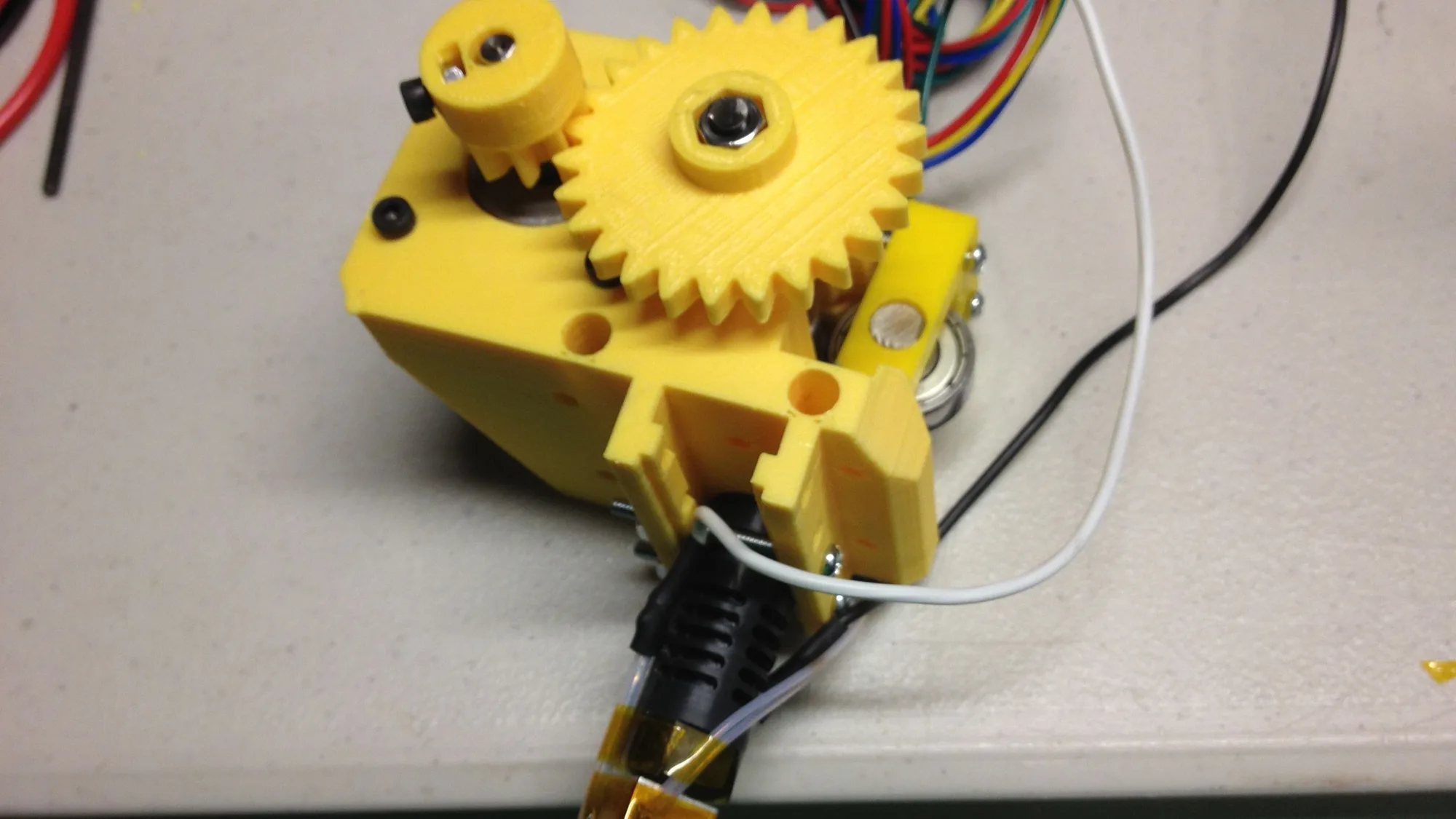
The best first 3D printer upgrades are the ones that solve a problem you actually have. This guide is desk research from manufacturer documentation and store pages, not a test of any part. It lists upgrades in the order most owners meet the need for them, and says when to skip each one.
If you only read one thing: print for a few weeks before spending anything. Modern printers are designed to work well out of the box, and random upgrades make it harder to tell what is causing a fault.
How to decide whether an upgrade is worth it
Ask three questions. What problem does it fix? Can you show the problem with a print? Does the manufacturer support the change? The last one matters because some changes void warranties or confuse firmware. Read your manual before swapping parts, and see our maintenance checklist first, since worn or dirty parts often cause what looks like a need for an upgrade.
If your problem is a poor first layer, stringing or a blob, a settings fix is nearly always cheaper. Start with fixing a bad first layer and fixing stringing.
Upgrade 1: a spare print plate
Print surfaces get scratched, oily or damaged, and a spare lets you keep printing while one is cleaned. On the UK-region Bambu Lab store on 2026-10-10, the Textured PEI Plate was listed at 17.99 GBP for the A1 mini and 31.99 GBP for the A1, P1 series, X1 series and P2S. Prusa's documentation shows why plate choice matters: it separates smooth, textured, satin and PA Nylon sheets, each with different cleaning rules. See our explainer on build plates.
Worth it if: your plate is worn or you want a different finish on the underside of parts. Skip if: your current plate grips well and releases parts cleanly.
Upgrade 2: a spare nozzle
A nozzle is a consumable. Bambu Lab suggests replacing a worn or leaking nozzle if cleaning does not restore extrusion, and Prusa publishes replacement guides for each of its printers, plus a printable Nozzle Replacement Tool. Keeping a spare turns a clog into a short job. See nozzle sizes explained before buying, because the diameter changes layer height limits and print time.
Worth it if: you print often or have clogged once already. Skip if: you are still on your first spool.
Upgrade 3: a hardened nozzle, only for abrasive filament
Prusa states that brass has excellent heat conductivity and is tough enough for most common filaments, but wears too quickly with abrasive ones. It also states that composite filaments filled with carbon, glass or kevlar require a hardened nozzle. It offers options named ObXidian and Hardened (nickel plated) for this purpose. Bambu Lab's A1 documentation shortens the cleaning interval from every five spools to every two when printing carbon fiber filament, which hints at how much harder those materials are on the hotend.
Worth it if: you plan to print filled filaments. Skip if: you only use PLA, PETG and similar unfilled plastics. Our hotends and nozzle materials guide goes into more detail.
Upgrade 4: a filament dryer or dry storage
Wet filament causes stringing, rough surfaces and weak parts, and no hardware upgrade will fix it. A dedicated dryer or sealed storage is often a better first purchase than any mechanical part. Start with how to dry filament, then see how to store filament and how to choose a filament dryer.
Worth it if: you buy PETG, nylon or TPU, live somewhere damp, or leave spools out for weeks.
Upgrade 5: an enclosure, ventilation or filtration
An enclosure keeps drafts off the print, which helps with materials such as ABS, and contains emissions. Clemson University's safety guidance suggests choosing enclosed printers where possible and says full enclosure appears more effective at controlling ultrafine particle emissions than a cover. Read enclosed vs open frame printers and our safety basics first. If you are on an open-frame printer, note that third-party enclosures change airflow, heat and fire considerations, so follow the maker's guidance.
Worth it if: you want to print ABS or ASA, or the printer sits in a living space. Skip if: you only print PLA and the room is ventilated.
Upgrade 6: a maintenance and tool kit
Hex keys, tweezers, a brass nozzle brush, isopropyl alcohol and the maker's own lubricant are what the Prusa and Bambu Lab maintenance pages list. See our starter kit guide. This is the cheapest upgrade and prevents the most failures.
Upgrades to be careful with
- Bolt-on parts for printers that are already tuned. Changing hardware can break calibration, so recalibrate afterwards using this guide.
- Anything that bypasses a safety feature. Prusa and Wayne State University both describe thermal runaway protection as a fire safeguard. Never disable it.
- Parts that make the printer faster before it prints well. Speed is a settings and tuning issue first.
Budget view
| Upgrade | Priority | Cost note |
|---|---|---|
| Spare print plate | High | Textured PEI plates listed at 17.99 to 31.99 GBP on the UK-region Bambu Lab store, 2026-10-10 |
| Spare nozzle | High | Check the maker's current listing |
| Filament drying | Medium to high | Depends on the dryer; check the current listing |
| Hardened nozzle | Only for abrasive filaments | Check the current listing |
| Enclosure or filtration | Depends on material and room | Check the current listing |
Wondering what the whole setup costs? See how much a 3D printer costs in the UK.
Frequently asked questions
What is the first upgrade I should make to my 3D printer?
A spare print plate and a spare nozzle are low-cost, low-risk first purchases. Beyond that, upgrade only to fix a problem you can reproduce in a print.
Do I need a hardened nozzle?
Only for abrasive filaments. Prusa says composites filled with carbon, glass or kevlar require a hardened nozzle, while brass is fine for most common filaments.
Will upgrades void my warranty?
It depends on the manufacturer and the part. Check the warranty terms and your manual before replacing anything other than listed consumables.
Is an enclosure worth it for a beginner?
It helps with materials such as ABS and for containing emissions, but PLA beginners in a ventilated room may not need one. Clemson University guidance prefers enclosed printers where possible.
Are cheap third-party upgrades safe?
Parts that touch heating or wiring deserve extra caution. Prefer parts the manufacturer supports and never bypass thermal runaway protection.
Sources
- Prusa Knowledge Base: Prusa Nozzle types for Nextruder printers
- Prusa Knowledge Base: Composite materials (filled with carbon, kevlar or glass)
- Prusa Knowledge Base: Changing or replacing the Prusa Nozzle
- Bambu Lab Store (UK): Bambu Textured PEI Plate
- Bambu Lab Wiki: A1 Maintenance Guidelines
- Prusa Knowledge Base: Regular printer maintenance (CORE One/+)
- Clemson University OES: 3D Printer Safety
- Wayne State University: 3D Printing / Additive Manufacturing Safety
- Prusa Knowledge Base: Thermal Runaway (i3 series)

Founder and editor
Software engineer since 2009 and Head of Engineering by day, a maker who has owned several 3D printers, writing practical guides to 3D printers, filament and running costs, with every article saying what was and was not tested.
Keep reading
3D Printer Maintenance Checklist
A practical 3D printer maintenance checklist: daily cleaning, monthly rail and fan checks, and quarterly lubrication, drawn from Bambu Lab and Prusa documentation.
11 October 2026 · 6 min read
Where to Put a 3D Printer: Space, Noise and Ventilation
Where you put a 3D printer affects print quality, noise and air quality. A practical guide to space, surfaces, ventilation and the best rooms, using maker documentation.
11 October 2026 · 7 min read
What Can You Make With a 3D Printer?
From brackets and hooks to miniatures, phone cases and prototypes: a practical look at what home 3D printers make well, which materials suit each job and where the limits are.
10 October 2026 · 7 min read