To dispose of 3D printer resin, never pour liquid or partly cured resin, or solvent with resin dissolved in it, down a drain or into household trash. Formlabs says cured resin can go out as household waste, while liquid resin and used IPA follow local hazardous-waste rules. Your resin's safety data sheet and local authority decide the details.
Not legal advice. Waste rules differ by country, state and city. This guide summarizes what resin makers publish (Formlabs and Prusa) and points you to the safety data sheet (SDS) and your local waste service. When their instructions differ from this page, follow theirs.
How do you dispose of uncured liquid resin?
Treat liquid resin as a hazardous chemical. Prusa says liquid resins "should be treated as dangerous chemicals" and that resin bottles, empty or full, do not belong in regular waste, with disposal following your country's rules for hazardous chemicals. It adds that there are usually special containers for such waste in public places such as near gas stations, which varies by area.
Formlabs gives two routes. If you have a chemical waste stream, add liquid resin to it in line with all applicable regulations. If you do not, its instructions for a small amount are:
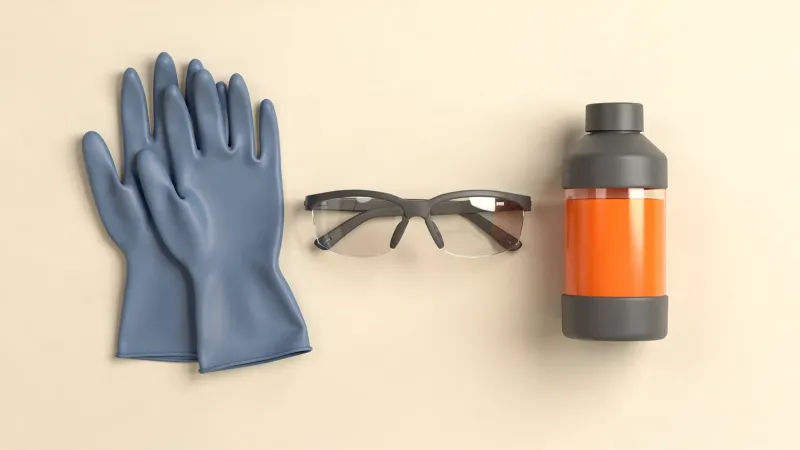
- Put on new, clean nitrile gloves.
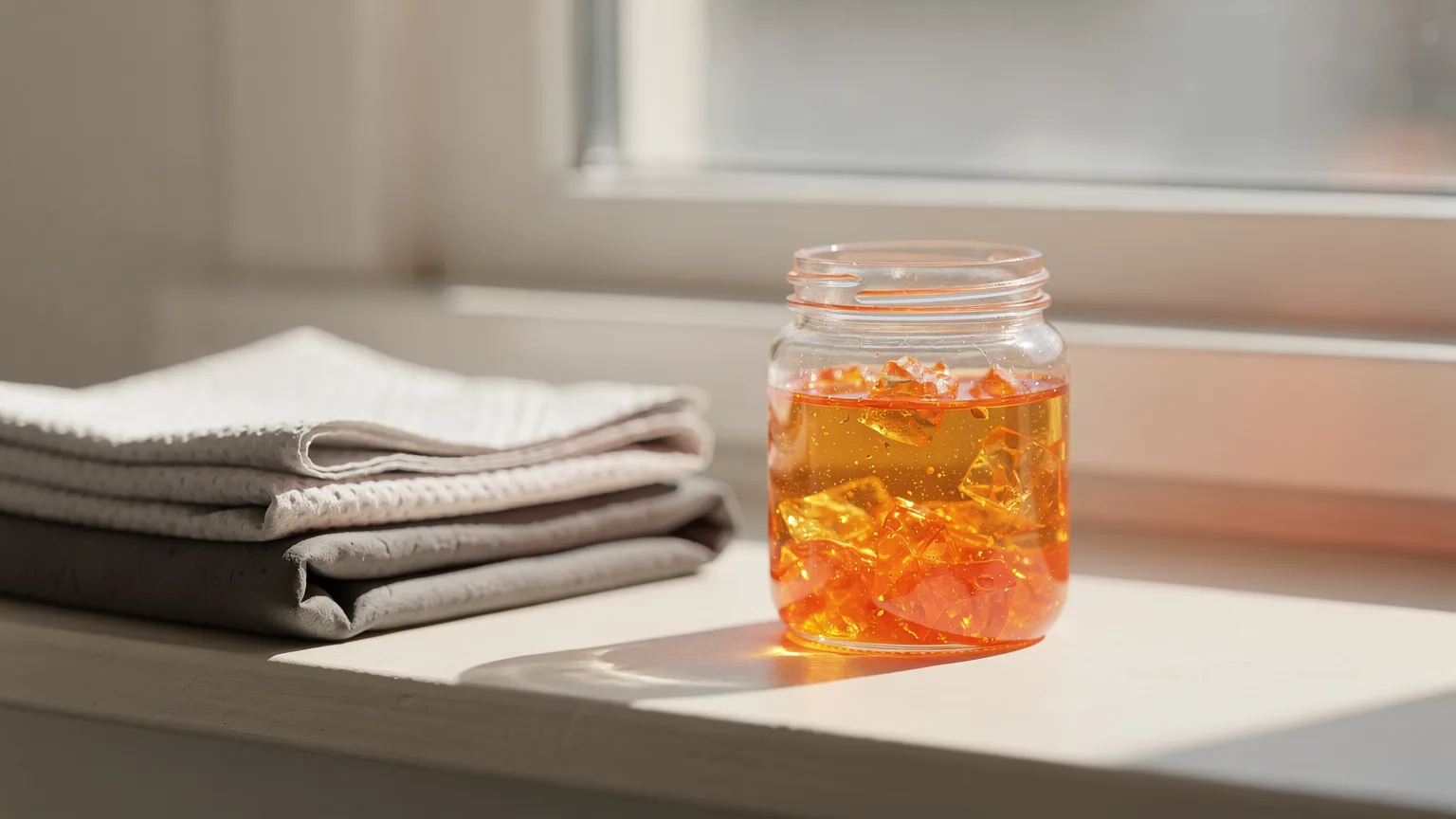
- Pour a small amount of resin into a labeled, transparent, resin-safe container.
- Leave the container in sunlight to cure for 1 to 10 days. Formlabs says 405 nm light and heat cure it most effectively.
- Dispose of the fully cured resin and the container as household waste.
Formlabs also says liquid resin, whether pure, dissolved in solvent or partly cured, may be classified as hazardous waste in your region. Cure only what is allowed under your local rules, and ask your waste service if you are unsure.
Can you throw cured resin in the trash?
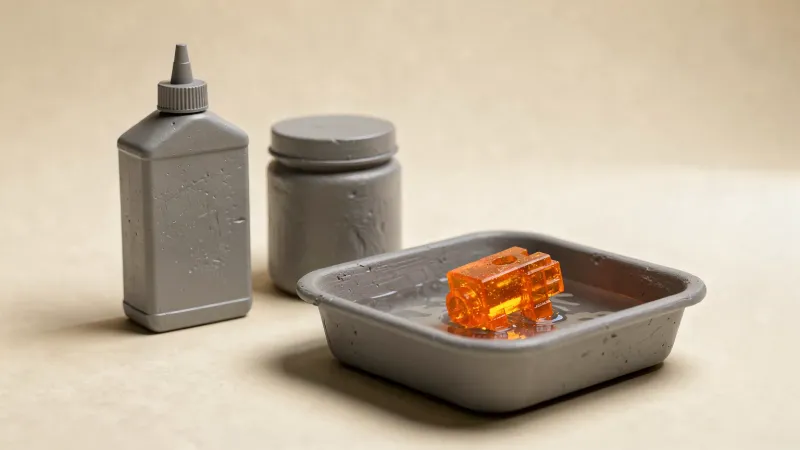
Yes, according to Formlabs: cleaned parts and cured (hardened) resin cannot be recycled, and it says to discard them as household waste. The same goes for failed prints, once washed and fully cured, and for support material. Leftover tacky or wet resin is not cured. Wash it, dry it and cure it under UV first, as set out in how to wash and cure resin prints.
How do you dispose of used isopropyl alcohol and wash liquid?
Used IPA with dissolved resin in it is hazardous waste in the Formlabs guidance, and the instruction is clear: do not pour it into drains or dispose of it with household waste. Formlabs says to:
- Consult the SDS from the IPA supplier as the primary source of information.
- Research your local hazardous-waste regulations. This will most likely involve hiring a waste disposal service.
- For smaller amounts, ask your local waste disposal service whether it has suggestions for removal.
- Tell the service the liquid contains small amounts of methacrylated monomers and oligomers (unpolymerized plastic resin) and trace amounts of photoinitiator, and keep the resin's SDS to hand.
Formlabs also says safe disposal methods for used IPA vary by location. Keep used liquid in a labeled, lidded container away from heat and ignition sources until you can hand it over. What to clean with in the first place is covered in what to use to clean resin prints.
For a high volume of IPA, Formlabs says a solvent recycling system, which distils used solvent so it can be reused, is a cost-effective alternative to paying for disposal. It notes the recycled IPA may still contain small amounts of monomer, so this suits workshops more than hobby use.
What about paper towels, gloves and spills?
Formlabs treats these as separate cases:
| Waste | What Formlabs says |
|---|---|
| Towels or supplies with liquid resin on them | Expose them to sunlight or UV light to cure the resin, then dispose of them as household waste |
| Towels and gloves soaked in IPA after a spill | Dispose of them as hazardous waste according to local regulations |
| Cleaned parts and cured resin | Household waste; cannot be recycled |
| Liquid or partly cured resin | Chemical waste stream, or cure first when you have none; never a drain |
| Used IPA containing dissolved resin | Hazardous waste service; never a drain or household trash |
Wear gloves while you clean up. Formlabs warns that resin and solvent may cause skin irritation or an allergic skin reaction, and says to wash skin with plenty of soap and water. For the wider picture of gloves, eye protection and ventilation, see resin 3D printing safety.
What should you do with water used to wash prints?
The maker documents we opened cover solvent, not water, so there is no maker figure to quote here. Water that has rinsed uncured resin off a print carries some of that resin, and the principle in the Formlabs guidance is that liquid with dissolved resin is not for drains. For water-washable resin, check the safety data sheet's disposal section and ask your local waste service before you pour rinse water away. Water washable resin explains why the rinse step still needs care.
Does the resin bottle need special handling?
Prusa says not to put resin bottles in regular waste, empty or full. Formlabs gives cartridge-specific rules, such as treating a US cartridge as empty once less than 3% (under 30 mL) of resin remains, and tells users outside the United States to triple rinse a cartridge with clean solvent and add the used solvent to a chemical waste stream. Those cartridge rules are for Formlabs cartridges, so use your own resin maker's instructions for a bottle.
Can you reduce how much waste you create?
- Pour back what you can. Scrape excess liquid resin from the build plate back into the vat or bottle before washing, as Formlabs advises for parts washed on the plate.
- Use the right amount of wash liquid and replace it only when it is spent. Formlabs gives 10 to 12% dissolved resin as the replacement point on its hydrometer.
- Use two containers so the final rinse stays clean and the first bath takes the load.
- Print right the first time. Failed prints waste resin and create cured waste. Fixing failed resin prints covers the common causes.
If you are still choosing a machine and wondering how much waste a hobby makes, what resin 3D printing is and our look at the best 3D printer for miniatures are the places to begin.