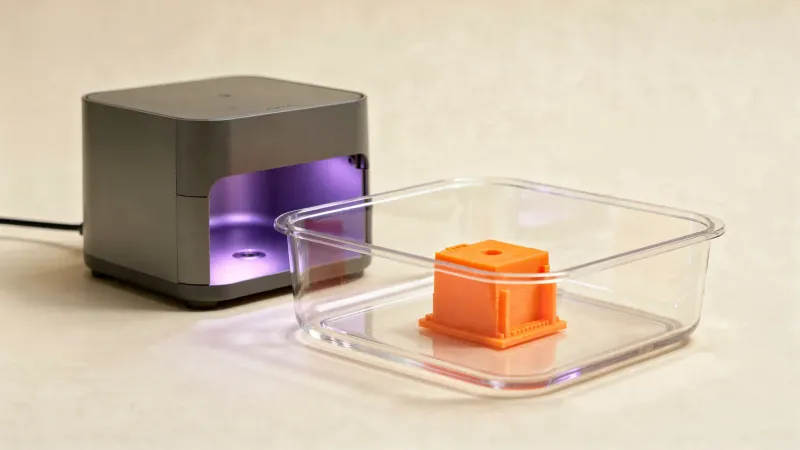
What to use to clean resin prints depends on your resin: isopropyl alcohol (IPA) of 90% or higher is the common choice that Formlabs and Prusa both document, while water-washable resins are made to be rinsed in plain water. Check the bottle and the safety data sheet first, because the right liquid depends on the resin.
If you only read one thing. Use the liquid your resin maker names. For standard resins that is usually IPA at 90% or higher; for water-washable resins it is water. Keep clean wash liquid separate from used liquid, wear nitrile gloves, and treat used IPA as hazardous waste.
This page is about the liquids and supplies. For the full sequence of removing, washing, drying and curing a print, read how to wash and cure resin prints. It is desk research from maker documentation, not a record of printing by us.
What can you use to clean resin prints?
Resin makers document three families of cleaning liquid: isopropyl alcohol, other solvents sold for the job, and water for water-washable resins. The maker pages we opened name these:
| Cleaning liquid | What the maker says | Source |
|---|---|---|
| Isopropyl alcohol (IPA) | Dissolves liquid resin. Most Formlabs resins can be washed in IPA at 90% or higher; biocompatible Formlabs resins need 96% or higher | Formlabs, Introduction to IPA |
| IPA only (no concentration given) | Prusa's CW1 article recommends isopropyl alcohol and nothing else, with a default 3-minute wash | Prusa Knowledge Base, Using the CW1: Washing |
| Tripropylene glycol monomethyl ether (TPM) or Formlabs Resin Washing Solution | Alternatives for the Form Wash. TPM does not evaporate readily, so parts must drip dry and then be rinsed in water or IPA | Formlabs, Using the Form Wash |
| Water | Elegoo says its 8K Water-Washable Resin V2.0 needs no alcohol bath: "simply rinse printed parts with water". Formlabs recommends against water in its own washer because it can cause rusting | Elegoo US product page; Formlabs |
The point of the table is that there is no universal answer. A wash liquid that is right for one resin system can be wrong for another, so the maker of your resin and your wash station decide.
Is isopropyl alcohol the best way to clean resin prints?
For standard (non water-washable) resin, IPA is the best documented option, because both Formlabs and Prusa name it and it dissolves uncured resin from the surface. Formlabs notes it goes by several names: isopropanol, 2-propanol, rubbing alcohol and surgical spirits.
Strength matters. Formlabs says the water in low-purity IPA may rust the metal parts in its washers over time, and that most of its resins can be washed in IPA at 90% or higher. If you only find low-percentage rubbing alcohol, the extra water is the issue, not the alcohol, so check the label percentage and your resin's guidance before you buy a large quantity.
Time matters as well. Prusa's default CW1 wash is 3 minutes and it does not recommend washing in IPA for more than 10 minutes, because tiny cracks can appear on the surface of printed objects, even after more than 24 hours. Longer is not cleaner.
How do you clean resin prints without a wash station?
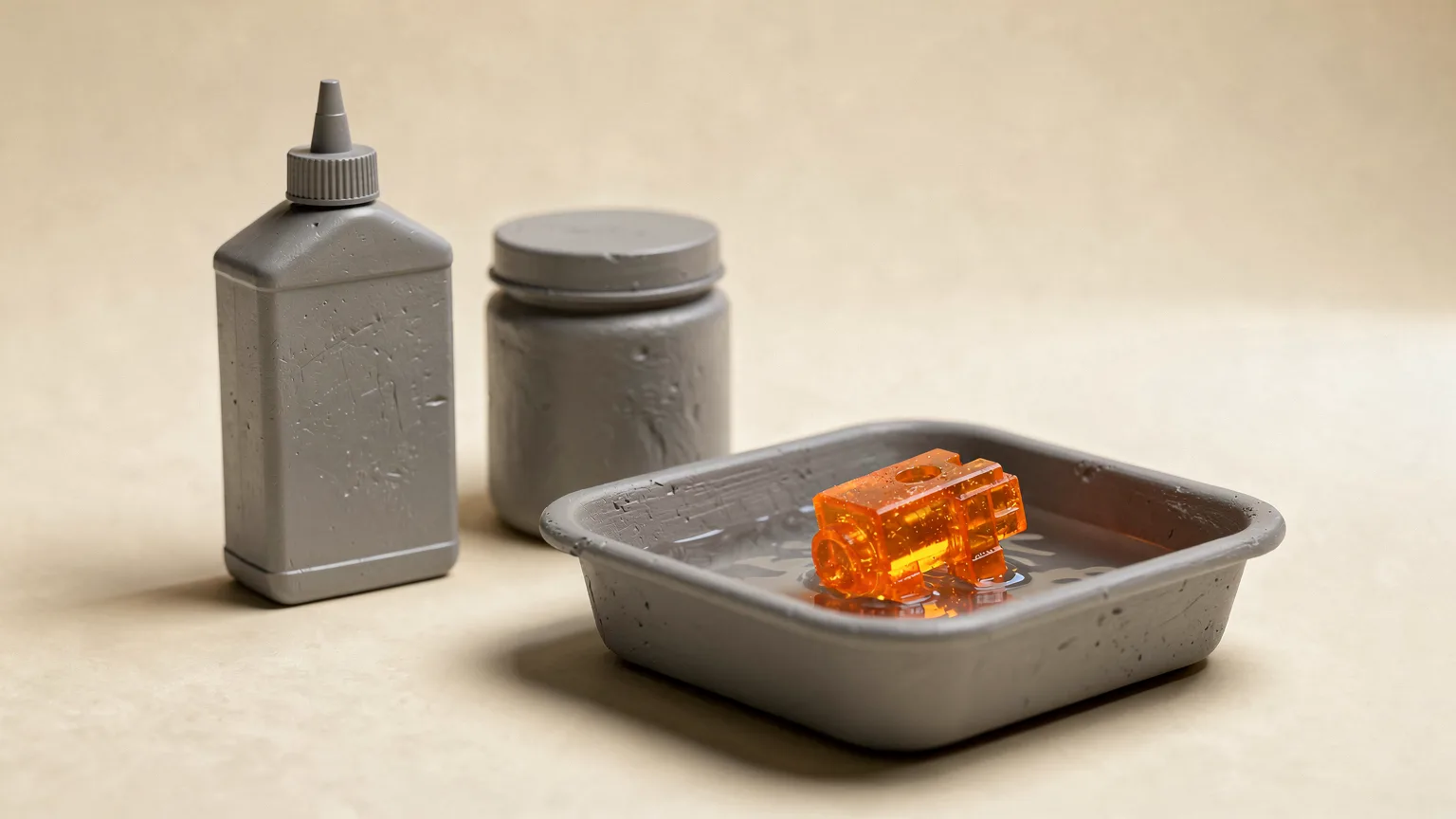
You can clean resin prints without a wash station by using two lidded containers of the wash liquid, a pair of nitrile gloves and a soft brush, then drying the part fully. A wash station only automates the agitation; the chemistry is the same.
- Two containers. Use a first container for the dirty wash and a second with clean liquid for a final rinse. This keeps the final rinse from leaving a film of dissolved resin on the part.
- Short, covered washes. Keep each wash within the times your maker gives. Cover the container so IPA does not evaporate into the room.
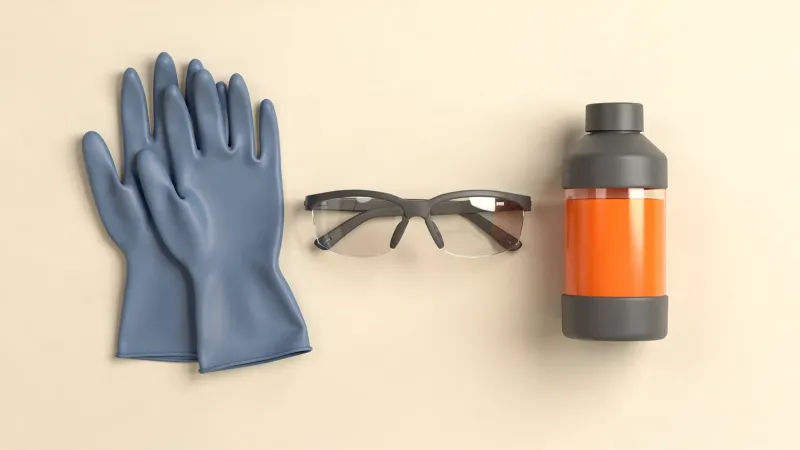
- Gloves and ventilation. Formlabs says to wear disposable non-reactive gloves (nitrile or neoprene) and work in a well-ventilated area. For eyes and fumes, follow resin 3D printing safety.
- Dry before curing. Formlabs says to let prints dry fully, and for volatile solvents such as IPA to allow at least 30 minutes after washing with ventilation while the solvent evaporates.
A dedicated station such as the Elegoo Mercury Plus V3.0 (listed at $150.00, struck through from $199.99, on the Elegoo US store on 2026-10-19) adds agitation and a curing stage, and is covered in our resin printer picks. It is a convenience, not a requirement.
What supplies do you actually need?
- Wash liquid of the type your resin maker names, in a quantity that matches your print volume.
- Two sealable containers made of a material the liquid does not attack. Check the container against the IPA or resin supplier's guidance.
- Nitrile or neoprene gloves (Formlabs), disposable, replaced when torn or soaked.
- Paper towels for drying and spills. Formlabs says to clean IPA spills at once using disposable supplies only, because spilled IPA is a fire and health hazard.
- A waste container for used liquid, labeled, with a lid. Disposal is covered in how to dispose of 3D printer resin.
- A UV source for the curing step.
Keep IPA away from ignition sources and store small quantities in properly labeled, sealed containers, as Formlabs advises. Prusa also calls IPA a volatile, flammable liquid.
When should you replace the cleaning liquid?
Replace IPA when it has taken up enough dissolved resin to stop cleaning well. Formlabs suggests replacement when resin reaches 10 to 12% of the IPA, which its Form Wash hydrometer measures; without one, a practical sign is a liquid that is visibly tinted and leaves tacky film on parts. That second sign is a rule of thumb, not a maker figure. Using a second container for the final rinse keeps the main bath cleaner for longer.
For a big print volume, Formlabs says solvent recycling systems that distil used solvent can be a cost-effective option, though the recycled IPA may still contain small amounts of monomer.
What if parts still feel sticky?
Sticky parts usually mean uncured resin is still on the surface, trapped in a hollow, or the part was cured before it was clean. Rewash briefly in clean liquid, dry and cure again. If a surface is persistently tacky or a print looks soft, fixing failed resin prints covers causes outside washing. If you are not sure which resin you have, types of 3D printer resin explains the families, and the next page covers water washable resin.
Common mistakes
- Soaking for hours "to be safe". Prusa warns that long IPA exposure can cause surface cracks.
- Washing a water-washable resin in IPA without checking the maker's guidance, or washing a standard resin in water.
- Tipping used liquid down the sink. Formlabs says not to pour solvent containing dissolved resin into drains or dispose of it with household waste.
- Skipping the dry time before the curing station.
If you are picking a machine to go with this routine, what resin 3D printing is is the starting point, and our look at the best 3D printer for miniatures compares specs.