Bambu Lab Filament Guide: Types, RFID Spools and Third-Party Options
What Bambu Lab sells, what its wiki says about temperatures, nozzles and the AMS, how RFID spools work, and what to check before using third-party filament.
By Sepehr Sabbagh-pour · Published 10 October 2026 · 9 min read
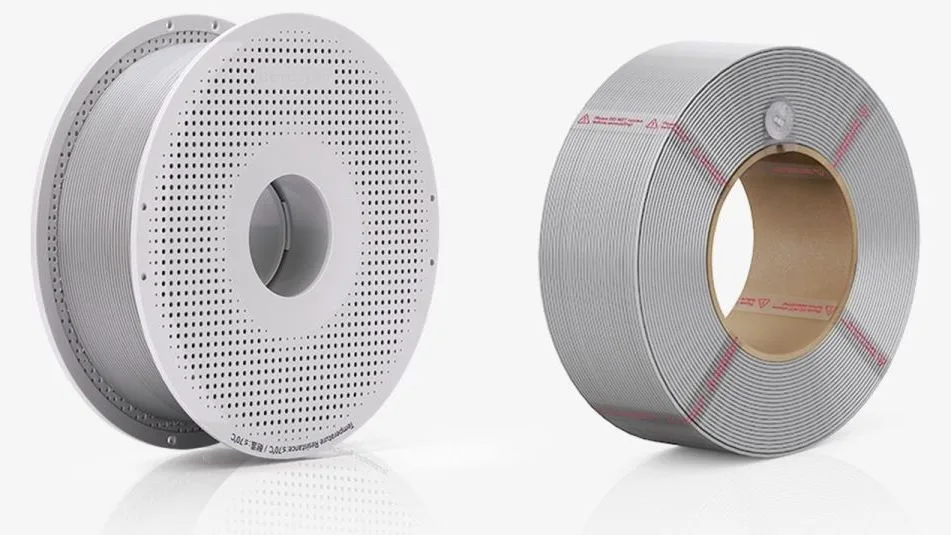
Bambu Lab sells its own filament in a wide range of materials, with RFID tags that let its AMS recognize each spool automatically. You can also use third-party filament, with some manual setup. This guide covers what Bambu Lab makes, what its documentation says about temperatures, nozzles and the AMS, how RFID spools work, and what to check before buying other brands.
This is a research article. It is based on Bambu Lab's wiki and store pages (listed in the sources), plus a Polymaker product page, not on our own printing. Prices are from Bambu Lab's UK store, checked on 2026-10-10. Bambu Lab's US store address redirected to the UK store when checked, so prices below are in pounds.
The short answer
- Start with PLA Basic (or PLA Matte). At £16.99 per 1 kg spool, or £13.99 as a refill, it is the base of the range.
- Use PETG HF when a part needs more toughness or heat resistance, and ABS or ASA on an enclosed printer.
- Carbon fiber filaments (PLA-CF, PA6-CF, PET-CF) need a hardened steel nozzle, per Bambu Lab's guidance.
- Official spools are recognized by the AMS through RFID. Third-party spools work, but you set the filament type and color yourself.
Bambu Lab filament types and prices
The table lists Bambu Lab's filaments as sold in its UK store on 2026-10-10, with the nozzle temperature range from Bambu Lab's filament guide. The temperature range is a guide for the Bambu Lab profile, with a tolerance of about 10 °C; the label on your spool and the slicer profile come first.
| Filament | Price, 1 kg with spool | Refill | Nozzle temperature (guide) |
|---|---|---|---|
| PLA Basic | £16.99 | £13.99 | 190 to 240 °C (PLA) |
| PLA Matte | £16.99 | £13.99 | 190 to 240 °C (PLA) |
| PETG HF | £16.99 | £13.99 | 230 to 260 °C |
| ABS | £16.99 | £13.99 | 240 to 280 °C |
| ASA | £27.99 | not listed | 240 to 280 °C |
| TPU for AMS | £34.99 | £30.99 | 200 to 250 °C |
| PLA-CF | £32.99 | £28.99 | 210 to 240 °C |
| PA6-CF | £70.99 (0.5 kg: £37.99) | not listed | 260 to 300 °C (PA-CF/GF) |
| PET-CF | £78.99 (0.5 kg: £41.99) | not listed | 260 to 300 °C (PET-CF/GF) |
Colors and stock vary, and Bambu Lab also sells silk, translucent, glow and other specialty lines not covered here. For the money side across brands, see how much filament costs.
Which Bambu Lab filament for which job
PLA Basic and PLA Matte
Bambu Lab's beginner guide calls PLA the best choice if you are just getting started, with predictable results, and gives a print range of 190 to 230 °C. Its material table lists a wider 190 to 240 °C for PLA. Use PLA for models, prototypes and indoor parts. It is the cheapest option and the least fussy. See PLA print temperature for how to tune it.
PETG HF
PETG offers better heat resistance than PLA, and Bambu Lab lists PETG HF as a high-flow version with a 230 to 260 °C range. Its wiki recommends an enclosed printer for PETG so low ambient temperature does not reduce interlayer strength. See PETG vs PLA and what is PETG.
ABS and ASA
Bambu Lab says ABS, ASA, PC and PA materials need an enclosed printer, because higher bed and chamber temperatures suppress warping and layer separation. Its beginner guide says ABS is moderately superior to PLA but prone to warping without a hot bed, and not food safe. Compare them in ASA vs ABS and ABS vs PETG. Open-frame models are discussed in A1 vs A1 mini.
TPU for AMS
Flexible filament is difficult in an AMS. Bambu Lab's wiki says to avoid TPU, TPE and absorbent PVA in the AMS because they can get stuck in the feed tube, while its table lists TPU for AMS as compatible with the AMS. Read the TPU page for your model before loading flexible filament, and see what is TPU.
Carbon fiber filaments
For carbon fiber or glass fiber filled materials, Bambu Lab says always use a hardened steel nozzle, and avoids stainless steel or brass nozzles because they wear quickly. For its own filaments such as PLA-CF and PETG-CF it highly recommends a 0.4 mm hardened steel nozzle. It also recommends a 0.6 mm hardened steel nozzle as the first choice for most such materials, with lower clogging risk. See hotends and nozzle materials and nozzle sizes explained.
RFID spools and the AMS
Bambu Lab's AMS reads an RFID tag on official spools. Its setup page says that with an official spool, the AMS automatically identifies the type and color of the filament, and you can tap the slot to view the details but cannot change them. With an unofficial spool, you configure the filament information on the printer screen, or in Bambu Studio, and the slot keeps that information until you change it.
Other points from Bambu Lab's AMS notes:
- The AMS supports spools with a width of 50 to 68 mm and a diameter of 197 to 202 mm.
- Bambu Lab recommends its own filament, which it says has been thoroughly tested with the AMS.
- Plastic spools that fit correctly are strongly preferred. For cardboard spools, use a spool adapter or adapter ring to reduce slippage and debris.
- Avoid flexible filament (TPU, TPE) and soft or absorbent PVA in the AMS.
- Avoid very hard or brittle filaments, including third-party fiber-reinforced ones, because they may wear the AMS PTFE tubes or snap. Bambu Lab says its own PLA-CF, PETG-CF and PAHT-CF are tuned to avoid this.
- PTFE tubes are consumables. Check them for wear during maintenance.
The AMS lite is more limited than the AMS. Bambu Lab says PETG-CF and PLA Wood work in the AMS but are not recommended for the AMS lite.
Using third-party filament on a Bambu Lab printer
Nothing stops you from using other brands. The practical points are:
- Set the filament manually. Pick the closest material and color on the printer screen or in Bambu Studio, as above.
- Check the spool. It must fit the AMS dimensions. Polymaker states that all its spools now have hardened edges that roll well in the AMS.
- Match the profile to the label. Use the temperature range printed on the spool, because Bambu Lab's profiles are tuned to its own filament.
- Avoid risky materials in the AMS. Feed flexible or abrasive filament from the spool holder, not the AMS, where your printer supports it.
- Use a hardened nozzle for filled filaments, regardless of brand.
Cardboard spools, thin flanges or loose winding are the most common reasons a third-party spool fails to feed. If you are comparing brands on price and quality, read cheap vs premium filament.
Reusable spools and refills
Bambu Lab sells many filaments as a refill without a spool, which in its UK store is £3.00 cheaper for PLA Basic. Its wiki describes a reusable spool design that cuts plastic waste in feeding by at least 20%. There are two types: a low-temperature spool rated to 70 °C, compatible with PLA and PETG, and a high-temperature spool rated to 90 °C, compatible with PLA, PETG, ABS, ASA, PA6-GF, ABS-GF, PAHT-CF, PET-CF, PA6-CF, PC and TPU. Match the spool to the material, especially if you plan to dry it.
Storage and drying
Bambu Lab says all filaments absorb moisture to some degree, and recommends drying before printing if you are unsure of storage conditions, then keeping filament sealed with desiccant. Its table suggests, in a blast drying oven, 55 °C for 8 hours for PLA, 65 to 70 °C for 8 hours for PETG, 80 °C for 8 hours for ABS and ASA, and 70 °C for 8 hours for TPU. It lists PETG HF as requiring desiccant protection during use. Bambu Lab also notes that open-frame printers (P1P, A1, A1 mini, A2L) cannot be used to dry filament on the bed. Read how to store filament and how to dry filament, and see the Bambu Lab UK guide for buying in the UK.
Frequently asked questions
Do I have to use Bambu Lab filament on a Bambu Lab printer?
No. Third-party filament works, but with an unofficial spool you set the filament type and color manually on the printer screen or in Bambu Studio, because the AMS only reads RFID tags on official spools.
What is RFID on Bambu Lab filament?
Official spools carry an RFID tag that the AMS reads, so the printer identifies the filament type and color automatically. Bambu Lab's setup page says you can view the details but not change them.
Which Bambu Lab filament is best for beginners?
Bambu Lab's own beginner guide recommends PLA as the best starting material. PLA Basic was listed at £16.99 for 1 kg with a spool, or £13.99 as a refill, in its UK store on 2026-10-10.
Can I use TPU in the AMS?
Bambu Lab's AMS notes say to avoid TPU, TPE and absorbent PVA because they can get stuck in the feed tube, although its material table lists TPU for AMS as compatible. Check the wiki for your printer before loading flexible filament.
Do carbon fiber filaments need a special nozzle?
Yes. Bambu Lab says to use a hardened steel nozzle for carbon fiber or glass fiber filled filaments, and not a stainless steel or brass nozzle, which wears quickly.
Sources
- Bambu Lab Wiki: Filament guide and material table
- Bambu Lab Wiki: Notes for AMS
- Bambu Lab Wiki: AMS setup and filament loading
- Bambu Lab Wiki: Filament guide for beginners
- Bambu Lab Wiki: Swapping new filament with a Bambu reusable spool
- Bambu Lab Wiki: Filament Drying
- Bambu Lab UK store: PLA Basic filament
- Polymaker PolyLite PLA (AMS FAQ)

Founder and editor
Software engineer since 2009 and Head of Engineering by day, a maker who has owned several 3D printers, writing practical guides to 3D printers, filament and running costs, with every article saying what was and was not tested.
Keep reading
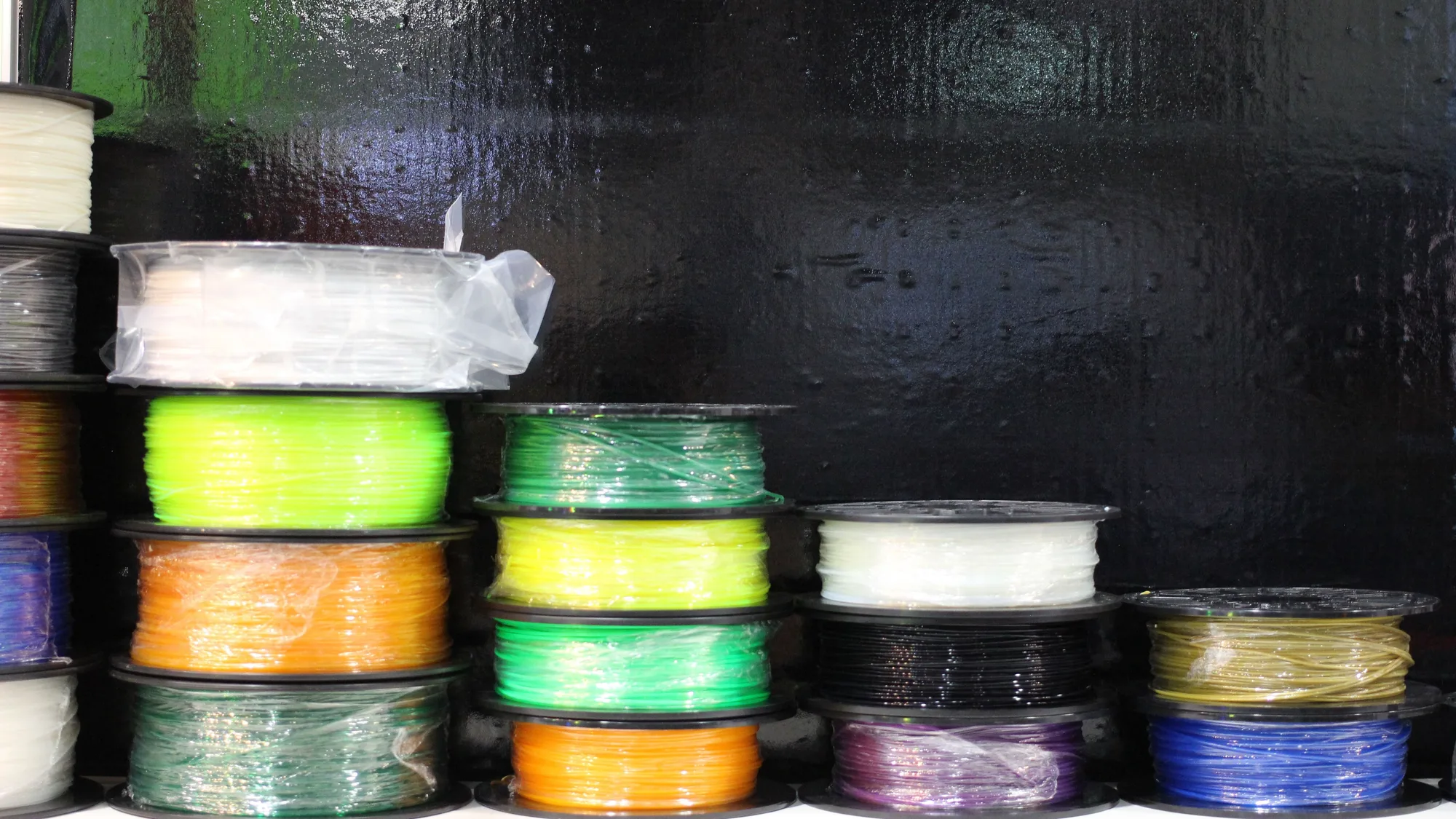
PLA vs PETG vs ABS vs TPU: Which Filament Should You Use?
Four materials cover most home printing. Here is what each is good at, what it demands from your printer, and how to choose without overthinking it.
10 October 2026 · 2 min read
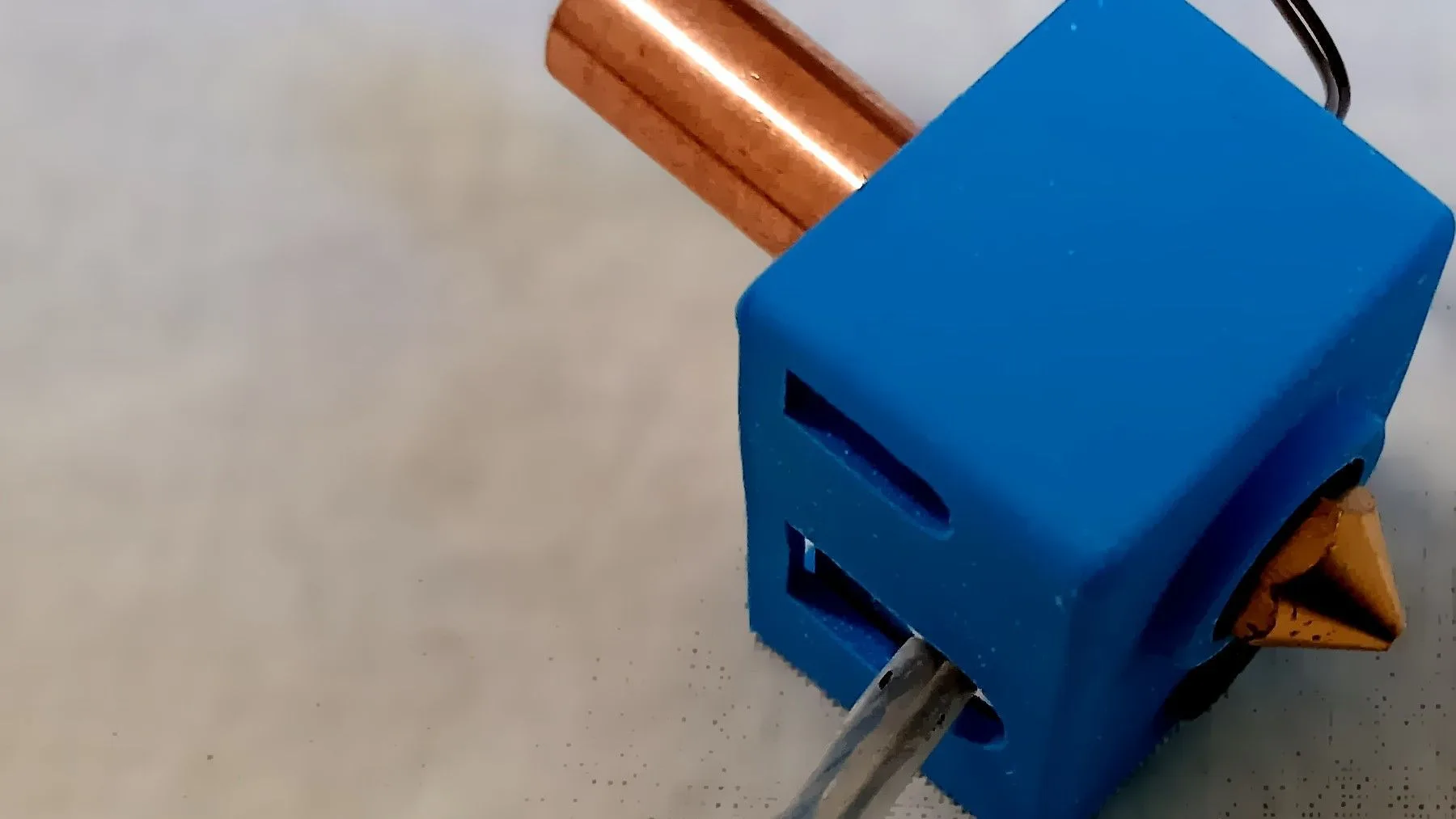
0.2, 0.4 or 0.6 mm? What Nozzle Size Actually Changes
The standard 0.4 mm nozzle is a good all-rounder, but swapping size trades detail for speed and strength. Here is what changes and what to watch for.
10 October 2026 · 2 min read
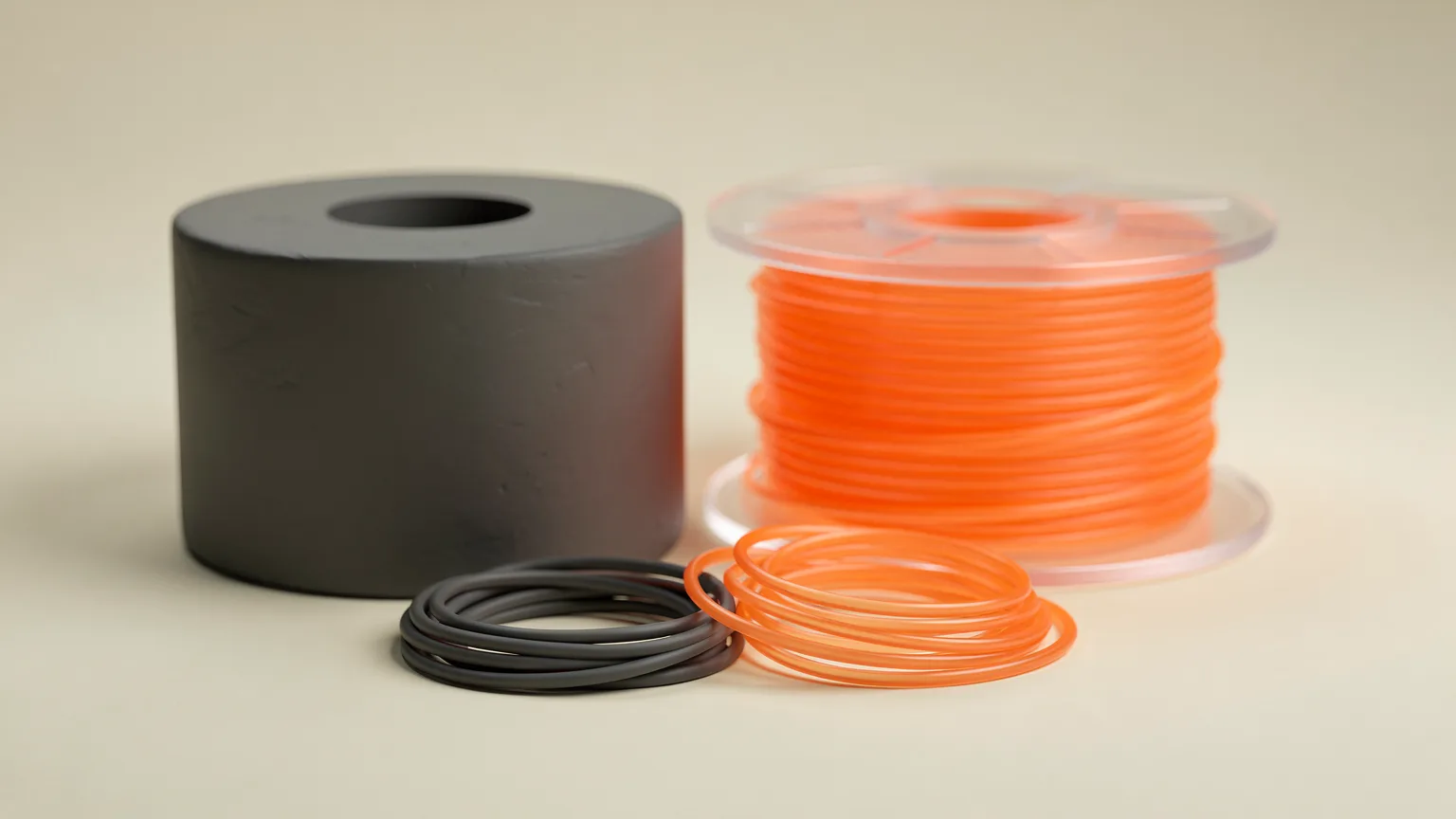
ABS vs PETG: Which Should You Print With?
ABS and PETG are both tougher than PLA. PETG prints easily on open printers; ABS needs an enclosure but can be smoothed with acetone. Here is how to choose.
10 October 2026 · 7 min read