To glue 3D printed parts, sand both mating faces, wipe them clean, and pick the adhesive by filament: super glue (cyanoacrylate) for PLA, acetone for ABS, and two-part epoxy for PETG or anything under load. Clamp the joint until it sets. Flexible TPU and nylon need a flexible glue.
Research-based guide. This article is compiled from maker and supplier documentation and has not been checked on a test printer. Cure times vary by product, so follow the label on your own adhesive.
What is the best glue for 3D printed parts?
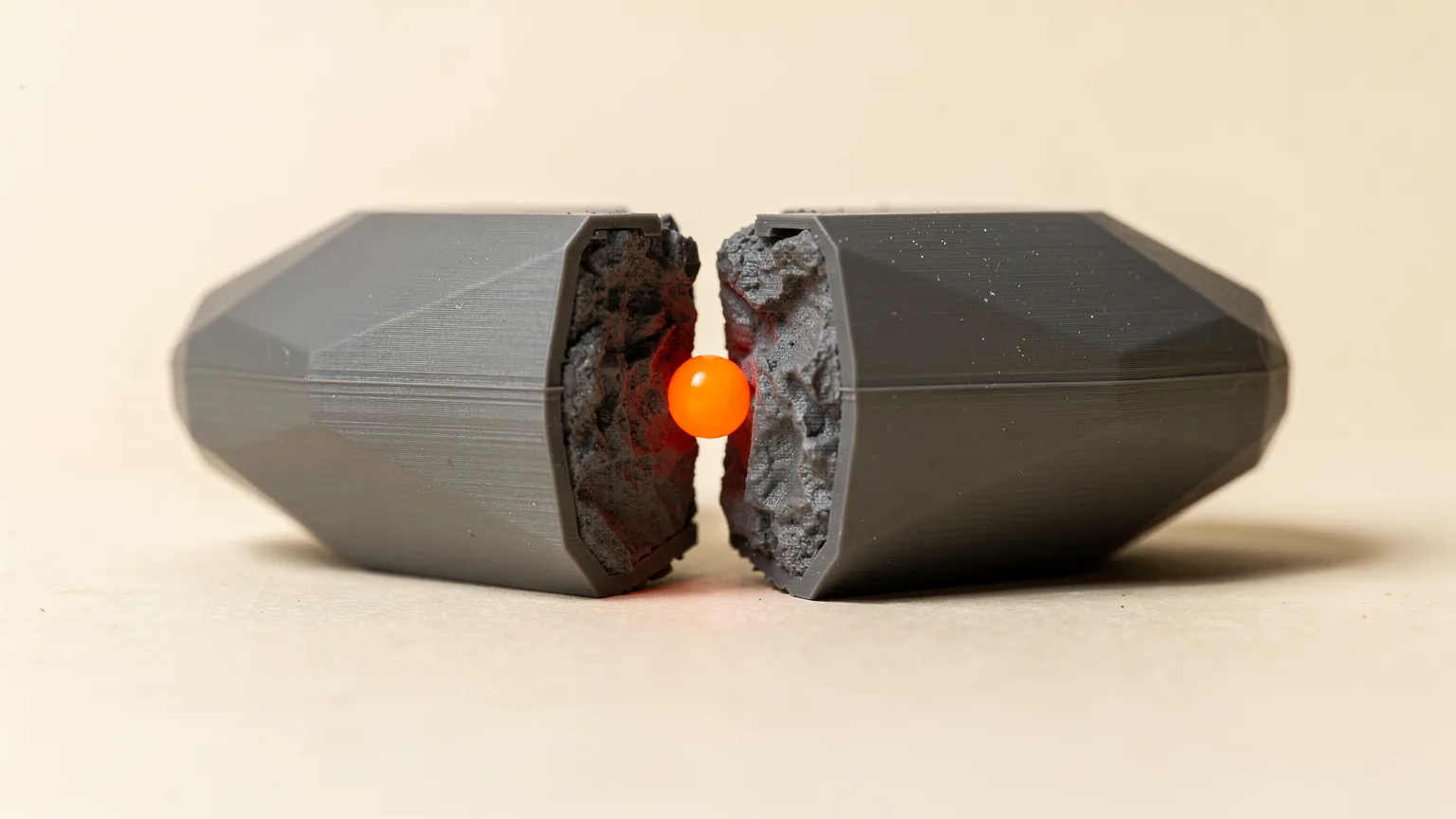
The best glue for 3D printed parts depends on the filament. Super glue is the common first choice for PLA, ABS and PETG because it sets in seconds, according to MatterHackers. Acetone fuses ABS into one piece. Two-part epoxy is the stronger option for big parts, gaps and PETG. Formlabs lists epoxy, cyanoacrylate and resin as its three bonding options.
The table below compares the methods named by Form Futura, MatterHackers, Formlabs and 3DSourced. A star means the supplier says results depend on the exact material, surface prep and product.
| Method | PLA | PETG | ABS | Best for |
|---|---|---|---|---|
| Super glue (cyanoacrylate) | Suitable | Suitable* | Suitable | Small and medium parts, fast assembly |
| Two-part epoxy | Suitable* | Suitable* | Suitable* | Large parts, gap filling, stronger joints |
| Acetone | No | No | Yes* | Seamless ABS joints |
| PVC cement | Not recommended | Not recommended | Not recommended | Use a plastic-specific adhesive instead |
How do you prepare 3D printed parts for gluing?
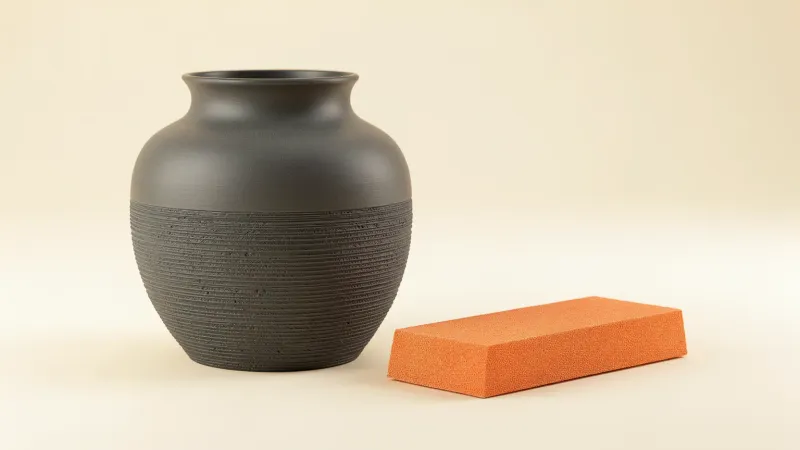
Sand both mating surfaces until they feel rougher than the untouched sides, then clean off the dust. MatterHackers says this gives the adhesive more surface area. 3DSourced adds gloves, fine-grit paper and an alcohol wipe. Form Futura says to clean and dry the surfaces and lightly sand them if they are uneven.
- Dry-fit the parts and check the seam lines up, because super glue cannot be adjusted once it sets.
- Sand each mating face lightly. For grit choices and finishing, see sanding 3D prints.
- Wipe away dust, then let the surfaces dry fully.
- Glue only the faces that need it, and have clamps, tape or rubber bands ready.
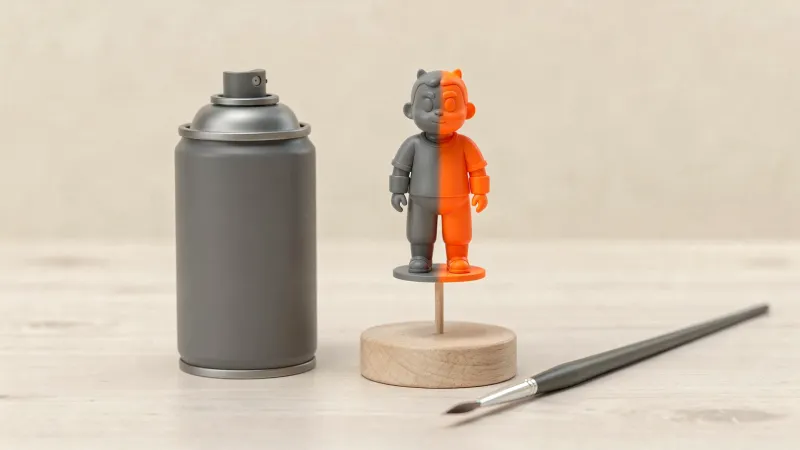
Flat, wide faces bond better than thin edges. If your model allows it, design the joint with interlocking tabs or slots so the adhesive is not carrying the whole load. Gluing is the last step before painting, so check the seam first and then follow how to paint 3D prints.
How do you glue PLA 3D prints?
Glue PLA prints with super glue. MatterHackers calls cyanoacrylate the most common and easiest option, and 3DSourced rates it the best glue overall for PLA, with Gorilla Super Glue drying fully in about 10 seconds. Form Futura also lists two-part epoxy as suitable, but says acetone is not a reliable bond for standard PLA.
Apply a thin film to one face, press the parts together and hold them still. Use very little, because MatterHackers warns that hardened squeeze-out is harder to sand than the print around it. For a stronger back seam, 5-minute epoxy can reinforce the joint on the side that will not be seen. Our guide to PETG vs PLA covers how the two materials differ.
How do you glue ABS and ASA prints with acetone?
Glue ABS by brushing a thin layer of acetone on both faces and pressing them together. Acetone softens the plastic so the pieces fuse, and the joint can be nearly invisible. Form Futura lists these steps: clean and dry, apply a thin layer with a solvent-resistant applicator, press and align, clamp until the solvent evaporates, then let it dry fully before stressing the joint.
- Test a small sample first, since Form Futura says modified ABS formulations vary.
- Avoid soaking or flooding the joint. 3DSourced warns that too much acetone weakens the part, especially thin walls.
- Acetone is highly flammable. Ventilate, keep it away from ignition sources and avoid skin and eye contact.
None of the sources opened for this article describes acetone welding of ASA, so test a scrap piece or use super glue or epoxy. See what is ABS filament and what is ASA filament for how the two materials relate.
How do you glue PETG 3D prints?
Glue PETG with super glue for light duty or two-part epoxy when the joint matters. Acetone does not bond PETG. 3DSourced notes that PETG's low surface energy keeps adhesive on the surface instead of soaking in, so the bond can be weaker. A 3D pen loaded with PETG filament is its suggested alternative, because the same material forms the joint.
Sanding matters more here than on PLA, since a rough surface gives the adhesive something to hold. Form Futura says PETG results depend on the exact material, preparation and joint design, so test a spare piece first. For more on the filament, read what is PETG.
How do you glue flexible TPU and nylon prints?
Use a flexible adhesive. MatterHackers says TPE, TPU and nylon are not very reactive to super glue, and Form Futura calls plain super glue less suitable for TPU without a specialized formulation. 3DSourced recommends flexible super glue such as Loctite 406 for TPU and nylon, and notes hot glue stays flexible when dry.
Avoid hard-drying glues on parts that must bend. Epoxy bonds to TPU but makes the joint stiff, per 3DSourced. Acetone is not suitable for either material. Our TPU filament guide explains why flexible prints behave differently.
How do you glue resin prints?
Formlabs lists the same three options for resin prints: epoxy designed for plastic, cyanoacrylate, and liquid resin. Epoxy suits large parts and is slower to assemble, and its impact strength is medium. Cyanoacrylate suits small and medium parts and dries quickly, but has low impact strength. Resin suits small parts, applied with a dropper or syringe and cured with a 405 nm UV light pen.
Handle uncured resin with gloves and eye protection, and read resin 3D printing safety before you start.
How long does glue take to cure on 3D prints?
It depends on the adhesive. Super glue sets in seconds to minutes, per Form Futura. 3DSourced puts Gorilla Super Glue at about 10 seconds to dry fully and Gorilla 2 Part Epoxy at 5 minutes to set, with clamping for 24 hours to cure. MatterHackers lists 3D Gloop at 15 to 30 seconds for a tack hold, about 80% strength after an hour and full strength in 6 hours.
What safety steps matter when gluing 3D prints?
Work with ventilation and read the product label. MatterHackers notes that super glue, epoxy and JB Weld have strong odors, and recommends a respirator and goggles with 3D Gloop. Form Futura says not to heat cured super glue joints, because thermal decomposition can release hazardous fumes, and to keep acetone away from ignition sources. For general printer guidance see 3D printer safety basics, and follow the maker's safety data sheet for any adhesive.
How do you fill gaps and hide the seam?
Fill larger gaps with body filler, glazing putty, wood filler or filler primer, then sand between coats. MatterHackers lists Bondo, Evercoat and 3M Acry-fill for this, and says to use them only if you plan to paint, since they differ in color and smoothness from the print. Epoxy and gap-filling adhesives also help. Super glue alone is poor at filling gaps.
Common mistakes when gluing 3D prints
- Skipping the dry fit. Super glue cannot be repositioned once set.
- Gluing smooth faces. Unsanded surfaces give less grip.
- Using acetone on PLA or PETG. It is not a reliable bond for either, per Form Futura.
- Over-applying acetone. It can weaken thin ABS walls.
- Using rigid glue on flexible parts. The joint cracks when the part bends.
If a joint will be taken apart again, skip the glue and use screws with heat set inserts for 3D printing instead.
If a joint should be a press or snug fit instead of glued, see clearances for 3D printed parts.