Best Filament for Outdoor Use: ASA, PETG and PLA
ASA is the best choice for sun and weather, PETG suits shaded spots, and PLA fails outdoors. Compare UV, heat limits and print difficulty from maker sources.
By Sepehr Sabbagh-pour · Published · 5 min read
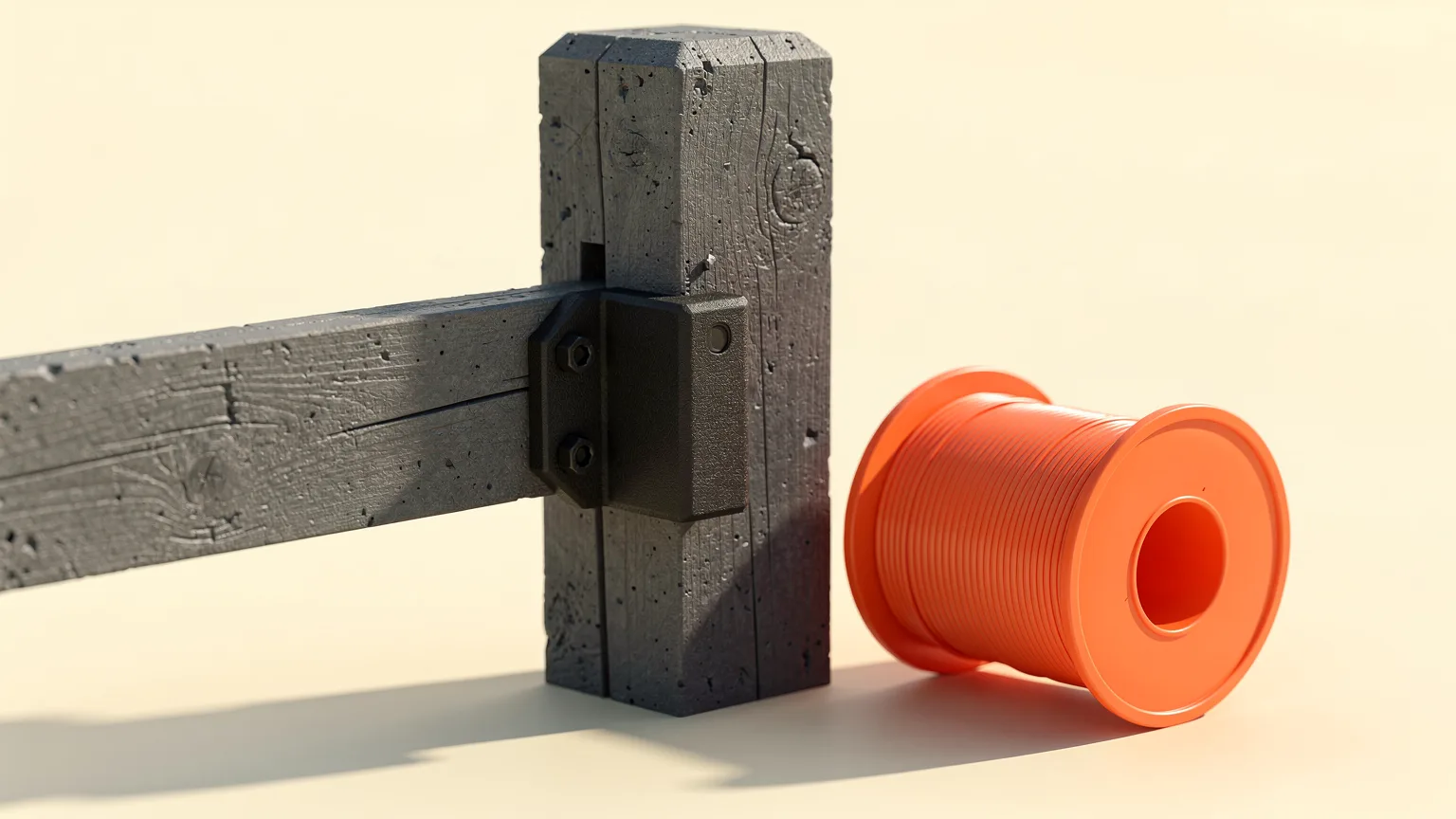
The best filament for outdoor use is ASA: Prusa lists it as suitable for outdoor use because of its UV and temperature resistance, up to 93 °C. PETG is the easier second choice for shaded or mild spots, and PLA is the one to avoid outdoors.
Best filament for outdoor use at a glance
This table compares the common filaments on what the makers and reference sources say about sun, heat and water. Figures come from the Prusa Knowledge Base pages for each material and Wikipedia, listed in the Sources section.
| Filament | Sun and UV | Heat limit stated | Difficulty | Pick it for |
|---|---|---|---|---|
| ASA | High UV resistance | Up to 93 °C | Hard: warps, needs an enclosure, fumes | Parts in direct sun and weather |
| PETG | UV not mentioned by Prusa | Exterior use below 80 °C | Medium: stringing, sticks hard to the bed | Shaded, damp or mild outdoor spots |
| ABS | Weaker than ASA | Similar to ASA | Hard: warps, fumes | Indoor parts, not sunlit ones |
| PLA | Degrades under UV light | Softens above about 60 °C | Easy | Indoor and short-term use only |
None of these was printed or weathered by Nozzle Notes. The comparison is research-based, so treat the heat limits as the makers' general figures and check the datasheet of your own spool.
What is the best filament for outdoor use?
ASA is the best filament for outdoor use when the part sits in direct sunlight or weather. Prusa describes ASA as suitable for outdoor use thanks to its high UV and temperature resistance, and Wikipedia says its acrylate rubber gives about ten times the weathering and ultraviolet resistance of ABS. It is the material to reach for with garden fittings, brackets, plant supports and housings.
The cost is a harder print. Prusa names warping as ASA's main drawback, recommends a nozzle at about 260 °C and a bed at 105 to 110 °C, and says an enclosure is needed for large parts. It also warns of potentially harmful styrene fumes, so ventilate and follow your printer maker's guidance. Our ASA filament explainer covers the settings and handling in detail.
Is PETG good for outdoor use?
PETG is good for outdoor use in mild conditions, though it is a weaker choice than ASA in strong sun. Prusa says PETG suits most exterior use at temperatures below 80 °C and lists it as water and humidity resistant, with good layer adhesion that helps waterproof parts. The Prusa PETG page does not mention UV resistance, so do not assume it matches ASA in full sun.
PETG is easier to print than ASA. Prusa suggests about 230 to 240 °C on the nozzle and 85 to 90 °C on the bed, and lists stringing, poor bridging and a very strong bond to smooth sheets as the main drawbacks. For rain-exposed or shaded parts such as planter liners, drain fittings or cable clips, it is a sensible default. Read what PETG is for the full profile, or ABS vs PETG if you are weighing a tougher alternative.
Can you use PLA outdoors?
PLA is not suitable for outdoor use. Prusa says PLA degrades under UV light, softens and deforms above roughly 60 °C, and is not suitable for technical and outdoor use. A PLA part left in a sunny spot or a closed car can lose its shape, and sunlight over time makes it more brittle.
PLA still has a place for short-lived outdoor jobs such as a one-day event prop or a prototype you will replace. For anything meant to last a season, pick ASA or PETG. If PLA is all you have, see PETG vs PLA for how the two differ, and PLA print temperature for its normal range.
ASA vs ABS vs PETG for outdoor parts
For the sun, rank ASA first, PETG second and ABS third. ABS is the predecessor of ASA, and Prusa says ASA has slightly better UV resistance and warps less than ABS. Wikipedia adds that ASA resists environmental stress cracking better, especially against alcohols and many cleaning agents.
- Choose ASA when a part will sit in direct sun, such as a bracket on a fence, a mount on a roof rack or a garden tool holder.
- Choose PETG when the part is damp rather than sunlit, or when you have an open-frame printer and want an easier print.
- Choose ABS only for parts that live indoors or in shade, where its lower cost and similar toughness matter more than weathering.
The ASA vs ABS comparison goes through the differences side by side.
What else decides how a part survives outside?
The material is only part of it. Heat, load and print quality also decide whether an outdoor part lasts, and these points follow from the heat limits above.
- Color. A dark part in full sun gets hotter than a light one, which matters when the material's heat limit is near 60 or 80 °C. This is general physics rather than a maker figure, so test a spare part in place before trusting it.
- Walls over infill. Prusa recommends more perimeters rather than more infill for solid PETG parts. Thicker walls also keep water out of the infill.
- Layer adhesion. Water can work into weak layers, so print outdoor parts a little hotter within the maker's range. Prusa says a higher filament temperature improves layer merging in PETG.
- Dry filament. Prusa describes ASA as partially hygroscopic. Wet filament prints poorly, so see how to dry filament.
- Enclosure. ASA wants a warm, draft-free chamber. Our enclosure guide covers the options.
For every material, follow the maker's safety guidance on ventilation. The 3D printer safety basics page is a starting point, and the types of filament overview shows where other materials such as nylon and polycarbonate fit.
How do you choose in practice?
Start with where the part will sit. Direct sun and weather points to ASA, a shaded or wet spot points to PETG, and an indoor part can use whatever you already have. If your printer is open-frame and you cannot enclose it, PETG is the realistic outdoor choice, and you can print small ASA parts only with care for warping.
Buy one spool of a mainstream brand, print a small version of the part and leave it where the real one will go before you commit to a large print. The print cost calculator helps estimate material cost per part, and the filament storage guide keeps the spare spool dry. No prices are quoted here, because they vary by brand, color and store.
Frequently asked questions
What is the best filament for outdoor use?
ASA is the best filament for outdoor use when a part sits in direct sunlight. Prusa's Knowledge Base calls ASA suitable for outdoor use because of its high UV and temperature resistance, with heat resistance up to 93 °C. Wikipedia says its acrylate rubber gives about ten times the weathering and UV resistance of ABS. The trade-off is a harder print: Prusa lists warping, styrene fumes and the need for an enclosure on large parts as drawbacks, and recommends about 260 °C on the nozzle. If you cannot print ASA, PETG is the easier choice for shaded or damp spots.
Is PETG good for outdoor use?
PETG works outdoors in mild conditions. Prusa says PETG suits most exterior use at temperatures below 80 °C and lists it as water and humidity resistant, with layer adhesion good enough for waterproof parts. Prusa's PETG page does not state UV resistance, so it is a weaker choice than ASA for parts in strong, constant sun. It is easier to print than ASA, using about 230 to 240 °C on the nozzle and 85 to 90 °C on the bed. Good uses are planters, drain fittings and clips in shade or rain.
Can you use PLA outdoors?
PLA is not a good outdoor filament. Prusa says PLA degrades under UV light, softens and deforms above roughly 60 °C, and is not suitable for technical and outdoor use. In practice that means a PLA part left in a sunny spot, a closed car or a hot shed can warp or become brittle. It can work for short-term jobs, such as an event prop or a prototype you plan to replace. For anything that has to last a season outdoors, choose ASA for sun or PETG for shade and wet conditions.
Is ASA better than ABS for outdoor use?
Yes, ASA is better than ABS for anything exposed to sunlight. Prusa describes ABS as basically a predecessor of ASA, with slightly worse UV resistance and more significant warping. Wikipedia says ASA has about ten times the weathering and UV resistance of ABS and keeps its gloss, color and mechanical properties outdoors. Both materials need a hot bed, an enclosure for large parts and good ventilation, so ASA is not harder to print than ABS. ABS can still make sense for indoor or shaded parts where it costs less.
Do outdoor 3D printed parts need an enclosure to print?
It depends on the material. Prusa says ASA needs an enclosure for large parts because warping comes from temperature differences between the model and its surroundings. Without one, it suggests enabling the draft shield in PrusaSlicer under Skirt and Brim. PETG is easier and often prints on an open-frame printer, since Prusa lists stringing and strong bed adhesion as its issues rather than warping. If you plan to print ASA regularly, an enclosure is worth having, and you should ventilate the room and follow your printer maker's guidance on fumes.
Sources

Founder and editor
Software engineer since 2009 and Head of Engineering by day, a maker who has owned several 3D printers, writing practical guides to 3D printers, filament and running costs, with every article saying what was and was not tested.
Drafted with AI assistance, then edited and reviewed by Sepehr before it goes live. How we use AI.
Keep reading
Types of 3D Printer Filament: PLA, PETG, ABS, TPU and More
Six plastics cover most home printing, plus filled and specialty blends. Here is what each is good at, what it demands from your…
 AI illustration
What Is ASA Filament? Outdoor-Ready Plastic Explained
ASA is a tough, UV-resistant filament that suits outdoor parts but warps and needs an enclosure. Learn what it is, what it needs…
 AI illustration
Best PLA Filament: 3 Brands Compared and What to Check
Three popular PLA filaments compared on maker-stated price, diameter tolerance and temperatures, plus what to check before you…