Best Filament for Functional Parts: Strength and Heat
PETG is the best all-round filament for functional parts, with ASA for heat, nylon for gears and polycarbonate for the hardest jobs. See the maker figures.
By Sepehr Sabbagh-pour · Published · 5 min read
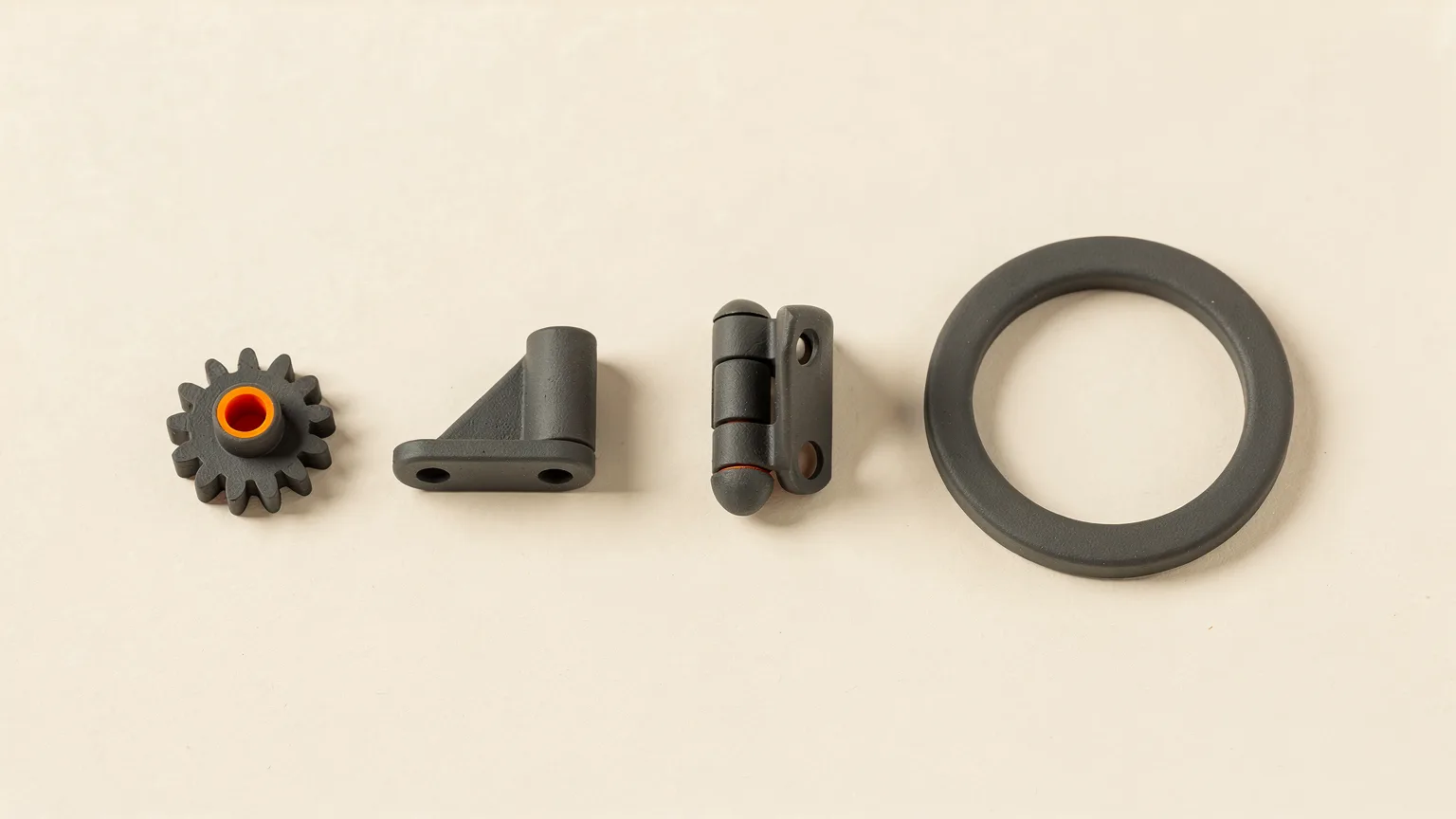
The best filament for functional parts is PETG for most jobs: Prusa calls it tough, durable and suitable for mechanical parts. Choose ASA when the part sees heat or sun, nylon for gears and wear, and polycarbonate for the highest heat. PLA suits only light, indoor loads.
Best filament for functional parts at a glance
This table compares the common materials using the Prusa Knowledge Base pages for each one, listed in the Sources section. The figures are the maker's general values for the material, so check the datasheet of your own spool.
| Filament | Strength and toughness | Heat | Difficulty | Pick it for |
|---|---|---|---|---|
| PLA | Brittle, breaks along layers or into shards | Softens above 60 °C | Easy | Prototypes, low-load indoor parts |
| PETG | Tough and durable | Exterior use below 80 °C | Medium | Brackets, holders, clamps, boxes |
| ASA | Tough, high impact and wear resistance | Up to 93 °C | Hard: warps, fumes | Parts that get hot or sit in sun |
| Nylon (PA) | Tough in large volumes, flexible in thin layers, abrasion resistant | High | Very hard | Gears, bearings, wear parts |
| Polycarbonate (PC) | Great tenacity and tensile strength | High | Very hard | Hot, high-load technical parts |
| Carbon fiber blends | Stiffer, but more brittle | Higher than the base plastic | Needs a hardened nozzle | Rigid jigs and frames |
None of these was printed or broken by Nozzle Notes. The comparison is research-based, so it tells you what the makers state, not how a given spool behaves on your printer.
What is the best filament for functional parts?
PETG is the best all-round filament for functional parts. Prusa lists it as tough and durable, with good temperature resistance, and names mechanical parts, holders, clamps, waterproof parts and printer parts among its uses. It prints at about 230 to 240 °C on the nozzle and 85 to 90 °C on the bed, so most printers can run it.
Its limits are heat and fine detail. Prusa says PETG suits most exterior use below 80 °C, and lists stringing, poor bridging and hard-to-remove supports as drawbacks. If a part must stay rigid above that or take constant rubbing, move up to one of the harder materials below. Our PETG explainer covers the settings in more depth.
Is PLA strong enough for functional parts?
PLA is strong enough only for light, indoor functional parts. Prusa describes PLA as brittle and inflexible, says it breaks along layers or into shards on impact, and says it gets soft and deforms above 60 °C. It is not recommended for technical or outdoor use.
That still leaves useful jobs: desk organizers, jigs you will replace, test fits and fixtures that never get warm or take a shock. A PLA part left in a closed car or near a heater can lose its shape. For anything that has to flex, snap in or take a drop, step up to PETG. The PETG vs PLA comparison goes through the trade-offs.
Which filament is best for strong, heat-resistant parts?
ASA is the practical choice for heat-resistant functional parts, with nylon and polycarbonate above it for harder jobs. Prusa rates ASA for temperature resistance up to 93 °C and describes it as tough, with high impact and wear resistance. Its main costs are warping, styrene fumes and the need for an enclosure on large parts.
- ASA suits brackets near warm equipment, car interior clips and sunlit mounts. See what ASA filament is, and ABS vs PETG if you are weighing the older ABS family.
- Polycarbonate is Prusa's pick for technical parts needing great heat and mechanical resistance, such as fan shrouds. Prusa rates pure PC very hard to print, with nozzle 275 °C and bed 110 to 115 °C, and says its blend is easier. Read what polycarbonate filament is first.
- Enclosure. Both ASA and PC warp on open printers, so check the enclosure guide.
Follow the printer maker's ventilation guidance for any of these, and see 3D printer safety basics.
What is the best filament for gears and moving parts?
Nylon is the best filament for gears and moving parts, because Prusa calls it resistant to abrasion and suited especially to technical parts. It is tough in large volumes and stays flexible in thin sections, and Prusa lists gears and bendable objects among its sample prints.
Nylon is demanding. Prusa says it is very hard to print and recommended for experienced users only, with about 285 °C on the nozzle and 110 °C on the bed. It is highly hygroscopic, absorbing water up to 10% of the filament's weight if stored badly, so dry it for at least 4 hours below 90 °C and keep it sealed. It can also emit ultrafine particles and odor, so ventilate. Start with what nylon filament is and how to dry filament.
For flexible functional parts such as seals, feet and bumpers, TPU is the material to look at instead.
Do carbon fiber filaments make stronger parts?
Carbon fiber filaments make stiffer parts, not always stronger ones. Prusa says carbon, glass or kevlar fibers increase high-temperature resistance and tensile yield strength and improve dimensional stability, but they usually decrease impact resistance and layer-to-layer adhesion and make the filament more brittle.
The fibers are highly abrasive, so Prusa says a hardened nozzle is required, and the risk of clogging is higher. Use them for rigid jigs, frames and parts that must not flex, not for pieces that take sharp impacts. Our PETG-CF explainer and the nozzle materials guide cover the details.
How do you choose in practice?
Start from the load the part will see, then pick the easiest material that survives it. A short decision path:
- Indoor, light load, may be replaced: PLA.
- Takes impacts or sits outdoors in mild conditions: PETG.
- Gets warm, near 90 °C, or sits in sun: ASA.
- Rubs, slides or turns against another part: nylon.
- Hot and heavily loaded: polycarbonate, ideally a blend.
- Must stay rigid and is not hit: a carbon fiber blend, with a hardened nozzle.
Print design matters as much as the plastic. Prusa recommends adding perimeters rather than infill for solid PETG parts, and the infill guide shows how walls and infill share the load. Orient the part so layers are not the weak point, since Prusa notes layer adhesion is weaker than the material itself in several filaments.
Buy one spool, print a small version and test it in place before a large print. Browse the types of filament for materials not covered here. No prices are quoted, because they vary by brand and store.
Frequently asked questions
What is the best filament for functional parts?
PETG is the best all-round filament for functional parts. Prusa's Knowledge Base describes it as tough and durable, with good temperature resistance, and lists mechanical parts, holders, clamps, waterproof parts and printer parts among its uses. It prints at about 230 to 240 °C on the nozzle and 85 to 90 °C on the bed, which most printers can reach. Its limits are heat, since Prusa says exterior use is fine below 80 °C, and fine detail. For hotter or harder-wearing jobs, move up to ASA, nylon or polycarbonate, accepting that each is harder to print.
Is PLA strong enough for functional parts?
PLA is strong enough only for light, indoor functional parts. Prusa describes PLA as brittle and inflexible, says it breaks along layers or into shards on impact, and says it softens and deforms above 60 °C. It is not recommended for technical or outdoor use. It still works for jigs, organizers, test fits and fixtures that stay cool and never take a shock. A PLA part left in a closed car or near a heat source can lose its shape. For parts that must flex, snap together or survive drops, PETG is the safer step up and is only a little harder to print.
What is the best filament for gears and moving parts?
Nylon is the best filament for gears and moving parts. Prusa calls it resistant to abrasion and suited especially to technical parts, tough in large volumes and flexible in thin layers, and lists gears among its sample prints. It is demanding: Prusa rates it very hard to print and recommends it for experienced users only, with about 285 °C on the nozzle and 110 °C on the bed. Nylon absorbs up to 10% of its weight in water if stored badly, so dry it for at least 4 hours below 90 °C, keep it sealed and ventilate the room.
Which filament is best for heat-resistant parts?
ASA is the practical choice for heat-resistant parts, and polycarbonate suits harder jobs. Prusa rates ASA for temperature resistance up to 93 °C and calls it tough, with high impact and wear resistance, but it warps, gives off styrene fumes and needs an enclosure for large parts. Prusa describes polycarbonate as having great tenacity, tensile strength and heat resistance, and suggests technical parts such as fan shrouds, though it rates pure PC very hard to print. Always check the datasheet for your own spool and follow your printer maker's ventilation guidance.
Do carbon fiber filaments make stronger parts?
Carbon fiber filaments make stiffer parts, not always stronger ones. Prusa says carbon, glass or kevlar fibers increase high-temperature resistance and tensile yield strength and improve dimensional stability, so parts warp less. The trade-off is that they usually decrease impact resistance and layer-to-layer adhesion, and the filament is more brittle. The fibers are also highly abrasive, so Prusa says a hardened nozzle is required and the risk of clogging is higher. Use them for rigid jigs and frames, and pick plain PETG, ASA or nylon for parts that take impacts.
Sources

Founder and editor
Software engineer since 2009 and Head of Engineering by day, a maker who has owned several 3D printers, writing practical guides to 3D printers, filament and running costs, with every article saying what was and was not tested.
Drafted with AI assistance, then edited and reviewed by Sepehr before it goes live. How we use AI.
Keep reading
Types of 3D Printer Filament: PLA, PETG, ABS, TPU and More
Six plastics cover most home printing, plus filled and specialty blends. Here is what each is good at, what it demands from your…
 AI illustration
Polycarbonate Filament: Strength, Heat and What It Needs
Polycarbonate is strong and heat resistant but one of the harder filaments to print. Here is what it is good for and what your…
 AI illustration
Best Filament Dryers: 4 Picks and How to Choose One
A filament dryer is only useful if it reaches the right temperature for your material and fits your spools. Four dryers compared…