3D Printing Business: What It Takes to Start One
What a 3D printing business needs: equipment, per-print costs, pricing, licenses for models, where to sell and the time involved, without legal or tax advice.
By Sepehr Sabbagh-pour · Published · 6 min read
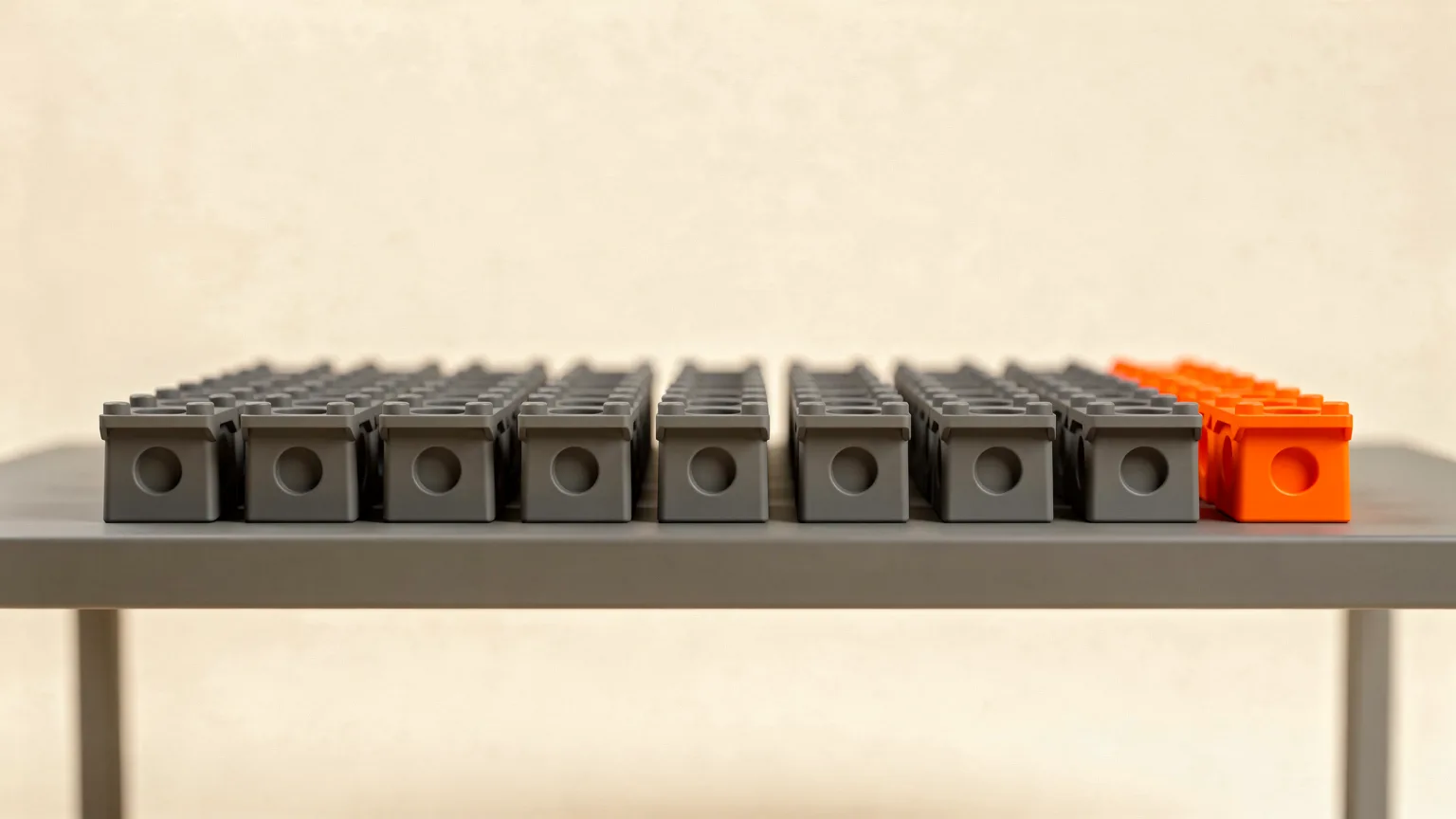
A 3D printing business is a small company that sells printed parts or products, or printing as a service, and it starts with one printer, a costed product and a place to sell. This guide covers equipment, running costs, pricing a print, where to sell and how much time it takes. It gives no legal, tax or insurance advice.
Short answer: you can start with a single desktop printer, but the money is made or lost on three things: what each print really costs, how many prints fail, and how many hours you spend per sale. Work those out before you buy anything.
What do you need to start a 3D printing business?
You need a reliable printer, a supply of filament, a way to finish and pack parts, and a product people will pay for. Most beginners start with one printer and add more only when orders outgrow it. A second printer is also a backup when the first one is down for maintenance.
- A dependable printer. Reliability matters more than top speed when you print the same part many times. Our guide to how much a 3D printer costs covers the price tiers, and the starter kit list covers the extras.
- Filament you can reorder. Pick one or two materials and stick with them. See types of 3D printer filament and how to store filament.
- Finishing tools. Snips, a deburring tool, sandpaper or primer, depending on the product.
- Packaging and a scale. Postage cost is part of your price.
- Somewhere to run it. Prints can take hours, so noise, heat and ventilation matter. See where to put a 3D printer and safety basics.
Whether it is worth it at all depends on your use, which is 3D printing worth it works through. Treat that as the first filter, then come back here.
How much does it cost to run a 3D printing business?
The running cost per print is filament, electricity, wear on parts, failed prints and your time. Filament is usually the smallest of these once you count failures and labor. A per-part cost is the base number for every price you set.
| Cost | How to estimate it | Where to read more |
|---|---|---|
| Filament | Part weight in grams (from your slicer) times price per gram | How much does filament cost |
| Electricity | Printer draw in kW times print hours times your tariff | Electricity cost per print |
| Wear and spares | Nozzles, plates and belts spread over expected prints | Maintenance checklist |
| Failed prints | Count your own failures and add that share to every part | 3D printer running costs |
| Packaging and postage | Weigh a packed order and price the carrier's tier | Your carrier's rate page |
| Your time | Setup, finishing, packing and customer messages per order | Track it for 10 orders |
The print cost calculator does the filament and electricity part for a single model. Add the other rows yourself. Prices change, so check current listings before using any figure.
How do you price a 3D print for sale?
Price a print by adding up its full cost per part, adding the time you spend, and then checking the result against what similar items sell for. If the market price is below your cost, the product is the problem, not the price.
- Work out material and electricity from the slicer's estimate.
- Add a share for failed prints, based on your own record, not a guess.
- Add finishing and packing minutes at an hourly rate you set.
- Add platform fees and postage if you charge for it separately.
- Compare with similar listings. Custom or personalized items can usually be priced higher than commodity ones.
A product that takes 10 hours of print time for one sale ties up a printer that could make several smaller items in the same time. Price per printer-hour as well as per part.
Can you legally sell prints of models from the internet?
Only if the model's license allows commercial use. A model under CC BY can be used commercially if you give credit, while a model under a NonCommercial license cannot be sold. The license on each model's page decides, so read it every time.
Creative Commons describes CC BY 4.0 as letting you copy and adapt the material "for any purpose, even commercially", with attribution as the main condition. It describes NonCommercial licenses as ones where "you may not use the material for commercial purposes", meaning use primarily intended for commercial advantage or monetary compensation. Some designers sell a separate commercial license for a model, and that is a matter between you and them. If a license is unclear, ask the designer or do not sell it. Ideas for finding models are in where to find 3D models. Making your own designs avoids the question and is easier to defend, and you can learn the basics with Tinkercad.
Where can you sell 3D printed products?
You can sell through a marketplace, your own web shop, local markets or direct custom work. Each has a different trade-off between reach, fees and control.
- Marketplaces. They bring buyers but charge fees and set rules. Trade press reported in June 2025 that Etsy revised its Creativity Standards so that 3D printed items must be based on a seller's original design and are often personalized to a buyer's specification, which affects sellers using other people's files. Etsy had not said how it would enforce this. Read the platform's current policy yourself before you build a product line on it.
- Your own shop. No marketplace rules, but you must bring your own traffic.
- Local sales. Markets, clubs and local shops suit small, low-cost items and avoid postage.
- Custom and repair work. Brackets, replacement clips and fixtures that cannot be bought. See what you can make with a 3D printer.
How much time does a 3D printing business take?
It takes more hands-on time than most people expect, even though the printer runs by itself. Time goes on design or file prep, setting up each batch, removing and finishing parts, packing, customer messages and printer upkeep.
Printing itself is the cheap part of the clock. Plan weekly and monthly care from your printer's documentation, as in the maintenance checklist, and expect to troubleshoot, for example prints not sticking or stringing. Keep a simple log for your first 10 orders: minutes per order, grams used, failures and fees. That log tells you more than any estimate in a guide.
What about registration, tax and insurance?
Those depend on where you live and what you sell, so follow your government's own pages and not a blog. In the UK, GOV.UK explains that most businesses register as a sole trader or a limited company, that a limited company must be registered before it starts trading, and that there is an income threshold for registering for Self Assessment as a sole trader. It also mentions VAT registration and business insurance as things to consider. In the US, the IRS page on starting a business covers choosing a business structure, an employer identification number, business taxes and recordkeeping, and points to state government websites for state requirements. Product safety rules can also apply to what you sell, so check them with the relevant authority.
A simple plan for the first month
- Pick one product and one material.
- Check the model license, or design your own.
- Cost one part with the calculator and add finishing, failure and packing allowances.
- Make a small batch and sell to a handful of people first.
- Log time, grams, failures and fees for 10 orders.
- Decide whether the numbers justify a second printer or a second product.
Frequently asked questions
How much does it cost to start a 3D printing business?
The main costs are one reliable printer, filament, finishing tools, packaging and somewhere safe to run it. Prices vary widely by printer tier and change often, so check current listings. Beyond the equipment, budget for running costs per print: filament, electricity, wear on parts, failed prints and platform fees. Your own time is also a cost, and it is the one most beginners leave out. Start with one printer and a single product, record what each order really costs you, and only then decide whether to buy a second machine or widen the range.
Can you make money selling 3D prints?
Yes, but only when the price covers the full cost per part: material, electricity, wear, failures, finishing, packing, fees and your time. Custom, personalized and hard-to-find items tend to hold a price better than commodity items that shoppers can buy cheaply elsewhere. Many sellers find that time per order, not filament, decides profit. The sensible test is to sell a small batch, log time, grams, failures and fees for about 10 orders, and see whether the result is worth repeating. A guide cannot promise you a profit.
Can I sell models I download from Printables or Thingiverse?
Only if the license on that model allows commercial use. Under CC BY you can use a model commercially if you credit the designer and follow the license terms. Under a NonCommercial license you may not use it for commercial advantage or monetary compensation, so you cannot sell prints of it. Some designers offer a separate paid commercial license. Marketplaces can also add their own rules about third-party designs, so read the platform policy as well. If the license is missing or unclear, ask the designer or choose another model.
Where can I sell 3D printed items?
Common routes are marketplaces, your own web shop, local markets and shops, and direct custom or repair work. Marketplaces give reach but charge fees and can change their rules. Trade press reported that Etsy revised its Creativity Standards in June 2025 to require 3D printed items to be based on a seller's original design, so check any platform's current policy before relying on it. Your own shop avoids platform rules but needs your own traffic, and local sales avoid postage for small, low-cost items.
Do I need a license or to register to sell 3D prints?
That depends on your country and what you sell, and this site gives no legal or tax advice. GOV.UK explains the UK options such as sole trader and limited company, and the IRS page on starting a business covers structure, an employer identification number, business taxes and recordkeeping in the US. Both point to further official guidance, including state or local requirements. Read the official pages for where you live, and check any product safety rules for what you plan to sell.
Sources

Founder and editor
Software engineer since 2009 and Head of Engineering by day, a maker who has owned several 3D printers, writing practical guides to 3D printers, filament and running costs, with every article saying what was and was not tested.
Drafted with AI assistance, then edited and reviewed by Sepehr before it goes live. How we use AI.
Keep reading
 AI illustration
Best 3D Printers for Beginners: Top Picks and Prices
A top-pick table of four beginner-friendly 3D printers with US prices, the downsides of each and a way to choose between them…
 AI illustration
Free CAD Software for 3D Printing: Where to Start
Six free CAD options for designing your own 3D prints, with the platform, license terms and limits of each, and a simple way to…
 AI illustration
How to Improve Bridging in 3D Printing
Bridges sag because plastic is printed in mid-air. Shorten the span, cool it, tune bridge speed and flow, or redesign the part.